Favorite Places of Your Favorite City


Kurapaty

Kurapaty

2 min. to read

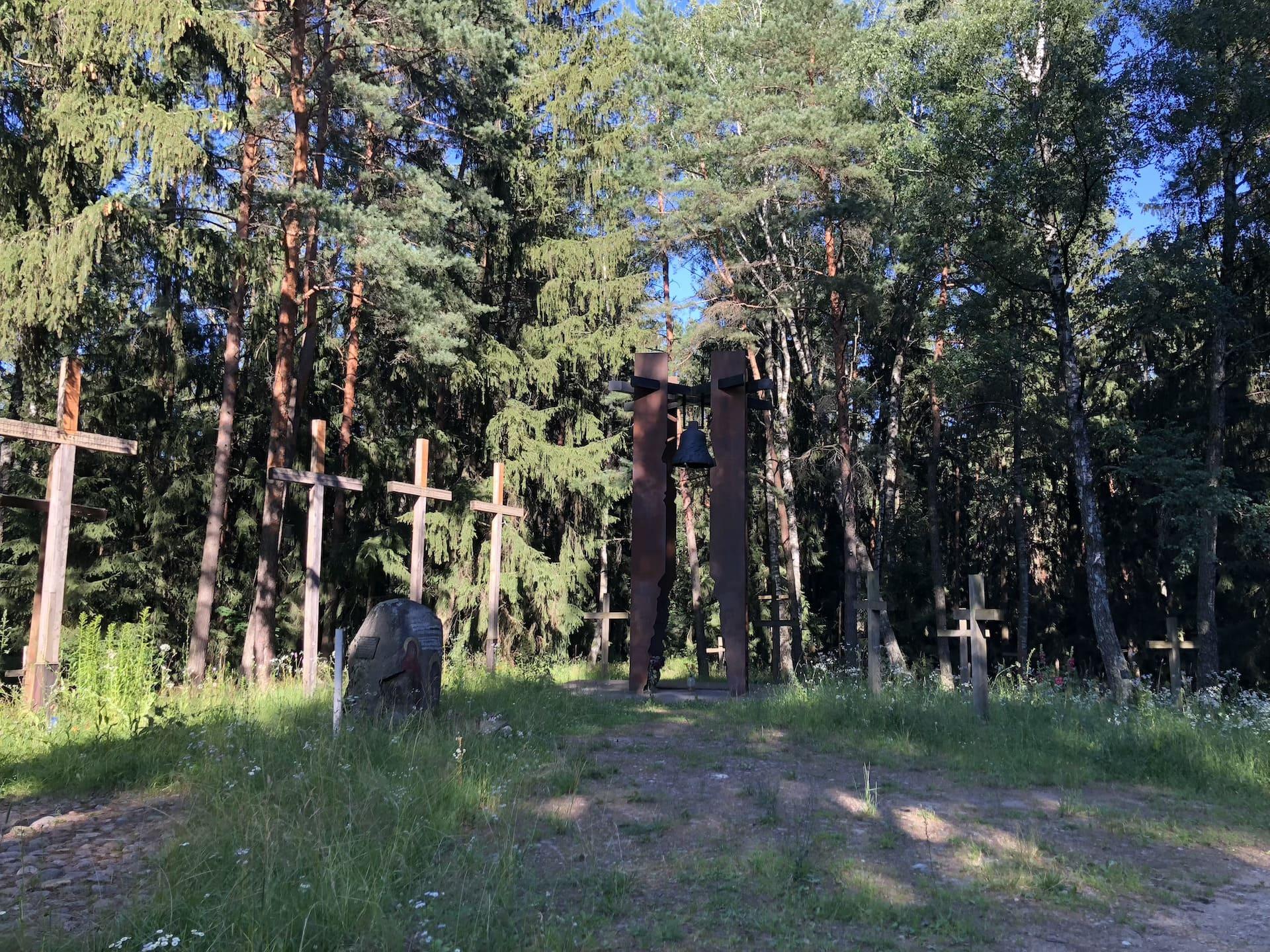
Kurapaty is a forested area in the northeast of Minsk, known as a site of mass burials of victims of Stalinist repressions in the late 1930s to early 1940s. Here, NKVD officers executed thousands of innocent people, most of whom were later rehabilitated. The number of victims remains a topic of debate, with estimates ranging from 7,000 to over 250,000 people. Initial investigations revealed 510 graves over an area of about 15 hectares. Kurapaty has become a symbol of the tragedy of political repression in Belarus. Since 1993, this site has been listed in the State Register of Historical and Cultural Values as a first-category object, highlighting its international significance. A memorial to the victims was established by the public in 1988, and since then, numerous memorial crosses and stones have been installed, along with a memorial with a bell and inscriptions in several languages. Kurapaty got its name from the white field flowers — "kuroslep" — that once grew here. The history of the area gained widespread attention after the publication of an article by Zenon Poznyak and Yevgeny Shmygalov in 1988, which included eyewitness testimonies of the executions. The publication caused a public outcry and led to a criminal investigation, although many archival documents remain sealed. The memorial has been visited by notable political figures, including U.S. President Bill Clinton in 1994. However, the site of remembrance has been repeatedly targeted by vandalism and political disputes. In recent years, actions to protect historical memory, as well as commemorative marches and prayers, particularly on All Souls' Day (Dzyady), have been held at the site of the mass burials. You can reach Kurapaty by buses and minibusses from the Zeleny Lug district or by car along the M3 highway.
Kurapaty: Features and location
Chinese New Year 2026: The Year of the Red Fire Horse and Its Traditions

Chinese New Year 2026 begins on February 17 and ushers in the Year of the Red Fire Horse, symbolizing energy, change, traditions, and renewal.

Read more

Sights Nearby

Latest Articles

Who Is an “Ank” and What Does This Slang Term Mean

A detailed explanation of the slang term “ank,” its origin, traits, cultural meaning, ironic use by zoomers, and its role in modern youth language.

Read more

What Is Tilt: Causes, Signs, and How to Regain Emotional Control

Tilt is a state of emotional overload where rational thinking breaks down and impulsive actions take over, common in games, work, trading, and everyday life.

Read more

Phishing in 2026: Types, Risks, and How to Protect Your Data

Phishing uses AI and fake sites to steal data. Learn types, signs, protection methods, and actions if targeted to stay safe online.

Read more

Cyberbullying: Types, Consequences, and How to Protect Yourself

Cyberbullying is online psychological abuse with serious mental, social, and physical consequences; anyone can be a victim, and prevention requires awareness and action.

Read more

“KFC Boss”: Meaning, Origin, and Why This Slang Term Is Considered Offensive

Explanation of the slang term “KFC Boss,” its meaning, origins, usage online, why it’s offensive, and how people respond to and protect themselves from it.

Read more

Sights in Minsk

Upper Town

Trinity Suburb

Red Church

Minsk City Gates

Opera and Ballet Theatre

Zybitskaya Street

Park of History Sula

Museum of Great Patriotic War

Independence Avenue

Victory Square

Holy Spirit Cathedral

Minsk Town Hall

Island of Tears

National Library of Belarus

Independence Square

ру | en | 中文

Contact author