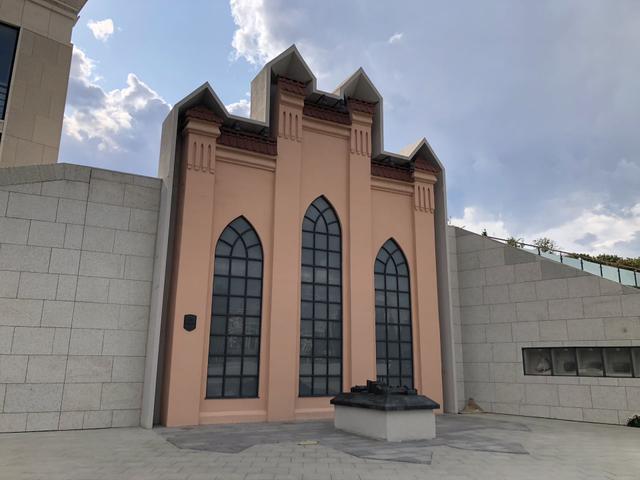
The historical heritage of Minsk comes to life thanks to the reconstruction of the facade of the first power station, which has once again found its place on the city map. The power station, built in the late 19th century, supplied electricity to the capital of Belarus for a long time and played a key role in the development of the city's infrastructure. The building, designed in the neo-Gothic style, became a symbol of progress and technological achievements of the time. The initiator of the construction was the city's head, Karol Gutten-Chapski, whose innovative decisions in urban management left an indelible mark on the city's history.
The power station opened in 1895 when Minsk became the fourth city in the Russian Empire to have its own power station. It provided lighting for the central streets and later other key urban infrastructure, such as hospitals, libraries, theaters, and telephone stations. Despite the high costs of construction and equipment, the city authorities decided that developing electricity as a key resource for the future was necessary.
Initially, the station operated on steam engines and produced direct current with a voltage of 120V. However, as the population's needs grew, the station's capacity became insufficient, necessitating equipment modernization. In 1899, the power station was renamed "Elvod" (a contraction of "electric-water station"), and at the beginning of the 20th century, it underwent a complete renovation, significantly increasing its capacity.
Unfortunately, after World War II, the building was rebuilt, and the original neo-Gothic style was partially lost. In 2011, during the construction of the Kempinski hotel complex, the power station was demolished to make way for the new buildings. However, the facade was dismantled and preserved in storage, leaving hope for its possible restoration.
In 2016, Sber Bank purchased the site, and thanks to investments, a decision was made to restore the historic facade of the power station to its original location. Despite the Ministry of Culture's conclusion that full restoration was impossible, work began. The reconstruction project, which involved over 100 specialists, aimed to accurately recreate the appearance of the building as it was more than a century ago. Missing facade elements were recreated based on archival data and scholars' recommendations.
The opening of the restored facade took place in a solemn ceremony, attended by high-ranking guests, including representatives of the energy sector and city authorities. The Minister of Energy of Belarus, Viktor Karankevich, emphasized the importance of preserving such sites as they are part of the history not only of the city but also of the entire country's energy system.
Although the exact amount of investment has not been disclosed, it is known that the restoration required significant financial input. A key element of the project was a bronze installation representing a model of four buildings: the power station, distribution station, water supply hub, and workers' housing. On the lower level of the installation is a brief history of the site.
In addition to the power station's facade, six memorial windows were installed in the adjacent area, displaying exhibits dedicated to Belarusian partisans. During the war, they tried to sabotage the German troops who used the power station for their purposes, but they were executed. These memorial windows remind us of the heroic deeds and are linked to the building's history.
Unlike many restored sites, where historical heritage often becomes a commercial enterprise, Sber Bank management stated they had no plans to use the power station's facade for commercial purposes. This architectural monument will remain a cultural and historical asset of Minsk, open for visitors. The power station facade is a reminder of the former grandeur of the city's industrial architecture, of the time when Minsk first lit up with electric light.
Thus, the restoration of the facade of Minsk's first power station not only preserves the architectural heritage but also returns to the city's residents an important part of their history. The meticulous restoration, based on archival documents and specialists' recommendations, has brought back a piece of the city's past.

.jpg&w=750&q=75)



%20(1).jpg&w=750&q=75)