
.jpg&w=640&q=75)
December 20,9 min. to read
Early Years and Education of the Polotsk Genius
Childhood in a Merchant Family
The future enlightener was born into the family of the merchant Luka (Lukian) Skaryna in one of the largest cultural centers of that era. Polotsk was an important political and spiritual hub, which created favorable conditions for the development of a gifted young man. Francysk received his primary education at home, where he mastered the basics of reading and writing.The Path to the Heights of European Scholarship
The educational journey of the young Skaryna continued at the school of the Polotsk Bernardine Monastery, founded in 1498. There he studied Latin, which opened the way to the best universities in Europe. In 1504, the talented youth entered the prestigious University of Kraków, enrolling in the Faculty of Liberal Arts. After only two years of study, Francysk earned a bachelor’s degree in philosophy, demonstrating exceptional abilities. His thirst for knowledge was not limited to philosophy—simultaneously, he studied medicine, law, and theology. The pinnacle of his academic achievements was the defense of his doctoral degree in medicine at the renowned University of Padua on November 9, 1512. The examination committee highly praised the knowledge of the young scholar, noting in the records that “the son of Master Luka Skaryna from Polotsk showed himself commendably and excellently.” The portrait of the Belarusian doctor of medicine still adorns the gallery of distinguished graduates of the University of Padua.The Beginning of Publishing Activity in Prague
Establishment of the First Printing House
Around 1517, Francysk Skaryna made a fateful decision to devote himself to book printing. With financial support from merchant patrons from Polotsk and Vilna, he founded a printing house in Prague, where traditions of Slavic book printing already existed. The choice of the Czech capital was driven by well-developed trade ties with the Grand Duchy of Lithuania.The Psalter — the First Book in the Old Belarusian Language
On August 6, 1517, the “Psalter” was published — the first edition in the history of East Slavic book printing. This work became a revolutionary event, as for the first time a biblical text was printed in Church Slavonic in a Belarusian recension, accessible to broad segments of the population. Over the course of two years, the Prague printing house issued 23 books of the Bible. Each edition was accompanied by original prefaces, commentaries, and interpretations that helped readers better understand the sacred texts. Skaryna used Cyrillic typefaces and richly decorated his books with woodcut engravings, initials, and ornamental headpieces.The Vilna Period of Publishing Activity
Around 1520, the enlightener returned to his homeland and settled in Vilna, the capital of the Grand Duchy of Lithuania. There, in the house of the Vilna burgomaster Yakub Babich, near the main market square, he organized the first printing house in Eastern Europe.The Small Travel Book and the Apostle
Around 1522, the Vilna printing house published the “Small Travel Book” — a unique collection of 18 church texts, supplemented with akathists, canons, and a calendar of solar and lunar eclipses. This compact format was specially designed for travelers and private reading. In 1525, the printing house released Skaryna’s last book — the “Apostle,” which narrates the deeds and epistles of Christ’s disciples. The Vilna editions were smaller in format and featured different artistic design compared to the Prague ones, but they retained a high quality of execution.Philosophical Views and Humanist Ideals
An Enlightening Mission for the Common People
In his prefaces, Francysk Skaryna appeared as a Renaissance philosopher-humanist. He sincerely believed in the necessity of enlightening “the common people of the Ruthenian language” and sought to make sacred texts understandable to every literate person. The humanist ideas were especially vividly expressed in the preface to the Book of Judith of 1519, where the enlightener wrote about natural love for one’s homeland: “For from birth, beasts that walk in the wilderness know their lairs, birds that fly through the air know their nests… so too do people, where they were born and nourished by God, have great affection for that place.”The Uniqueness of the Publishing Approach
Skaryna did not simply translate biblical texts — he adapted them to contemporary reality, supplying them with commentaries and explanations. His books acquired a secular character and became an instrument of spiritual enlightenment for the people. The enlightener himself created engravings, monograms, and decorative elements, turning the editions into works of visual art.Medical Practice and Later Years
Service at European Courts
After the cessation of his publishing activity in the second half of the 1520s (likely due to the death of patrons), Francysk Skaryna returned to medical practice. He served as secretary and physician to the Vilna Catholic Bishop John. In 1529, Duke Albrecht Hohenzollern invited the experienced doctor to Königsberg to combat an epidemic of the “English sweating sickness” that was devastating European countries. This journey became one of many in the biography of the indefatigable scholar.The Prague Years
In the late 1530s — early 1540s, Francysk Skaryna moved to Prague, where he obtained a position at the court of King Ferdinand I. According to documents, he worked as a royal gardener in the botanical garden surrounding Prague Castle and simultaneously performed the duties of a court physician.Legacy and Memory of the Great Enlightener
The exact date of Francysk Skaryna’s death is unknown; however, researchers date this event to around 1551. In January 1552, his son Simeon received from the Czech king a privilege to inherit the property of “Doctor Francysk Rus of Polotsk.” The burial place of the pioneer printer remains a mystery.Influence on Cultural Development
Skaryna’s book legacy comprises 520 surviving copies distributed in more than 50 countries worldwide. His editions stimulated the development of book printing in the Muscovite state and had a tremendous influence on the spiritual culture of the East Slavic peoples. Manuscript copies of his books spread across vast territories, contributing to the dissemination of literacy.Modern Veneration of His Memory
The name of Francysk Skaryna stands alongside the greatest figures of the Renaissance — Leonardo da Vinci, Raphael, Jan Amos Comenius. In modern Belarus, the Order and Medal of Francysk Skaryna have been established, awarded for outstanding contributions to the development of science, culture, and education. Monuments to the pioneer printer have been erected in many Belarusian cities, including a majestic bronze sculpture near the National Library in Minsk and a monument in his native Polotsk. A state university in Gomel and streets in numerous cities bear his name. In 2017, Belarus celebrated the 500th anniversary of national book printing with large-scale events: a 20-volume facsimile edition titled “The Book Heritage of Francysk Skaryna” was presented, the exhibition “Francysk Skaryna and His Era” was organized, and the documentary film “Pershadruk” was produced. The country succeeded in reclaiming a unique copy of the “Small Travel Book” — the first book printed on the territory of modern Belarus. Francysk Skaryna remains a symbol of Belarusian enlightenment, an outstanding scholar and humanist whose creative legacy continues to inspire generations of researchers, cultural figures, and all who value the spiritual wealth of the Slavic peoples.Latest News
.jpg&w=750&q=75)
Yakub Kolas: Founder of Modern Belarusian Literature
Yakub Kolas was a leading Belarusian writer, poet, scholar, and cultural figure whose works shaped modern Belarusian literature and identity.
Read more
%20(1).jpg&w=750&q=75)
New “4 Seasons” Shopping Center Opens in Minsk's Krasny Bor District
On Dec 16, 2025, new “4 Seasons” shopping center opened in Minsk's Krasny Bor district, drawing big crowds. Features Dionis supermarket & free parking.
Read more
Latest Articles

Setting Appropriateness & Romantic Success: New Study Insights
Discover how the perceived appropriateness of a setting drives the success of romantic advances—often outweighing factors like attractiveness or familiarity.
Read more

Cyprus: Europe’s Sunniest Destination – 300+ Sunny Days
Explore Cyprus, Europe’s sunniest destination with 300+ sunny days a year. Discover top resorts, best seasons to visit, and why it’s perfect for a holiday.
Read more

Belly Fat and Aging: New Scientific Discoveries
Recent research reveals how belly fat accelerates aging, boosts inflammation, and increases Alzheimer's risk—discover key health insights and prevention tips.
Read more
.jpg&w=750&q=75)
Burning Fat with Your Mind: How “Remembering” Cold Activates Brown Fat and Boosts Metabolism
Discover how recalling cold memories can trigger your brain to activate brown fat, boost metabolism, and aid weight loss—even from the comfort of a warm room.
Read more
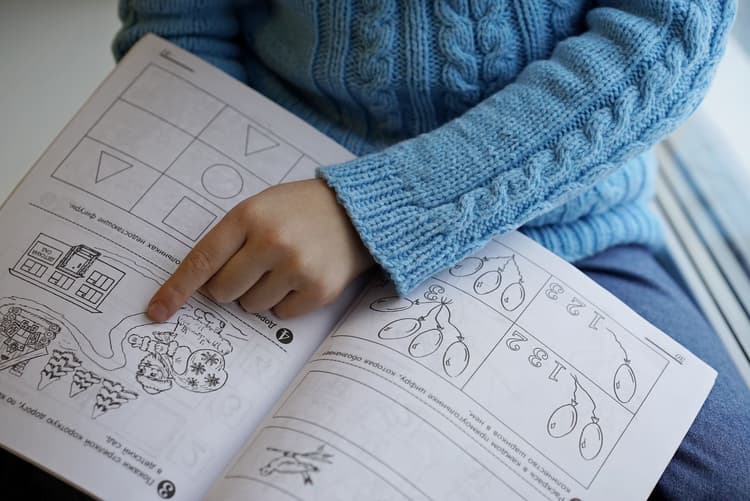
Bridging the Education Gender Gap: Why Boys Fall Behind and How to Close It
Boys globally lag in language skills due to peer influence, stereotypes, and systemic issues—discover causes, impacts, and strategies to close the education gender gap.
Read more