
13 min. to read
History of Lubyanka Square: from the 15th century to the present day
Formation of the square in the pre-Petrine era
The history of this place began in 1480, when settlers from Novgorod arrived in the territory of modern Moscow. In 1535, construction of the Kitay-Gorod wall with the Vladimir Gates began here; merchants and money changers gathered at the gates, turning the area into a lively commercial center. The square became a witness to key historical events. During the Time of Troubles, it was here that a decisive battle took place between the forces of Minin and Pozharsky and the Polish interventionists. After the liberation of the city, Prince Pozharsky’s palace was built on Lubyanka, and later the estate of Governor-General Rostopchin was located here.The Copper Riot and military fortifications
In 1662, the square became the site of the bloody Copper Riot. The uprising was brutally suppressed, and its instigators were publicly executed. After these events, the authorities created earthen fortifications and bastions on Lubyanka to protect against a possible Swedish invasion. These military structures existed until the early 19th century. In 1835, architect Ivan Vitali built a drinking-water fountain here, which became an important element of the city’s infrastructure. Nearby was a cemetery for the poor and the unknown, giving the area a distinctive atmosphere.The dark legacy of Saltychikha’s estate
At the corner of Bolshaya Lubyanka stood the estate of the infamous Saltychikha, a sadistic landowner responsible for the deaths of around a hundred serfs. After her crimes were exposed, Catherine the Great ordered the torturer to be put on trial, and the estate passed to other owners. Under Peter I, the Secret Chancellery was located here, where interrogations were conducted in an atmosphere of fear.Revolutionary transformations and the Soviet era
After the revolution and the civil war, the Bolsheviks moved the capital from Petrograd to Moscow. In 1918, the Cheka, led by Felix Dzerzhinsky, settled on Bolshaya Lubyanka; he established his office here and lived here until 1920. The Vitali fountain was dismantled in 1931 and moved to the inner courtyard of the Alexandrinsky Palace. In the 1930s, the complex of security service buildings expanded significantly. A monument to Dzerzhinsky was installed on the site of the former fountain. The statue stood until August 1991, when it was dismantled and moved to the Park of Arts. In memory of the victims of political repression, the Solovetsky Stone from the Solovki camp was placed on the square.Sights of Lubyanka and the surrounding area
The FSB building and its architecture
The main building of the Federal Security Service is made of sandstone and rises above a granite plinth decorated with Soviet emblems. Originally built in 1897 as the office of the Russian Insurance Company, the building was transferred to the Cheka in March 1918. Under Stalin, architect Shchusev designed additional wings that doubled the capacity of the complex by 1947. Today, the main FSB departments are housed in a dark-gray building from the 1980s, located west of historic Lubyanka. The complex occupies a large area, including a computer center and service facilities.FSB Historical and Demonstration Hall
The Security Service Museum opened to visitors in 1984 on the initiative of Andropov. Initially created for agency employees, it became accessible to the general public, including foreigners, in 1989. The exhibition presents the history of the security services from the Cheka to the present day. Among the exhibits are Dzerzhinsky’s desk, secret cameras used by foreign spies, smuggled weapons, and special equipment. Particular attention is paid to the activities of Soviet intelligence officers in Germany and Switzerland, as well as the work of the Cambridge Five. The museum is located in the building of the State Security Workers’ Club on Bolshaya Lubyanka, adorned with a giant bas-relief featuring Dzerzhinsky’s portrait.Detsky Mir department store and the Museum of Childhood
In 1957, the largest children’s goods store in Moscow was built opposite the KGB building. This decision symbolized the memory of Dzerzhinsky, who headed the commission to combat child homelessness. The store took the place of a medieval armory workshop where the famous Tsar Cannon was cast. The Museum of Childhood is one of the most popular museums in Moscow. Its collection includes Soviet toys, books, board games, and household items that evoke nostalgic memories of childhood for several generations.Museum of Soviet Arcade Machines
This unusual museum was created by a group of enthusiasts and contains a collection of functioning arcade machines from the Soviet era. Visitors can play legendary games such as Sea Battle and Sniper, experiencing the atmosphere of the past.The Solovetsky Stone and memorial square
The memorial to the victims of political repression is a massive stone brought from a camp on the Solovetsky Islands. The square around the stone serves as a place of remembrance for the tragic pages of national history, attracting those who honor the victims of the GULAG.Architectural gems of the district
The mansion of Count Rostopchin
The dilapidated building behind a decorative fence at 12 Bolshaya Lubyanka belonged to Count Rostopchin, the Moscow governor who ordered the capital to be burned in 1812 before the French troops entered. The count fled from the enraged crowd besieging his house. It was Rostopchin’s agents who set fire to the wine stalls in Kitay-Gorod, leading to a massive blaze that engulfed half of Moscow.Sretensky Monastery
The monastery was founded on the site where Muscovites welcomed the arrival of the miraculous icon of the Mother of God in 1395. Nearby stands the bright Church of the Vladimir Icon of the Mother of God, surrounded by the spreading trees of the Boulevard Ring. After devastation during the Soviet period, the monastery was restored; monks now live in green-and-white houses on its grounds.Menshikov Tower
The Church of the Archangel Gabriel, built in 1705–1707 by order of Prince Menshikov, is known as Menshikov Tower. The bright pink building combines Western secular forms with Orthodox architecture. The original bell tower with a wooden spire and fifty bells was three meters taller than the Ivan the Great Bell Tower in the Kremlin, which caused dissatisfaction among church authorities. In 1723, the spire burned down after being struck by lightning. Restoration began only in 1766–1780 under the leadership of the Mason Izmailov, who designed a bell tower with two octagonal tiers instead of three and a gilded crown. The church interior more closely resembles a Catholic cathedral, with frescoes, garlands, and cherubs.Apraksin Palace
Built in the 1760s, the Apraksin Palace is the last example of decorative Baroque architecture in Moscow. The façade is adorned with curved windows, crenellated niches, groups of angels, and Corinthian pilasters copied from the Winter Palace. During the Soviet period, it housed the Industrial Academy, where Stalin’s wife Nadezhda Alliluyeva and Nikita Khrushchev studied.Mayakovsky Museum
The Vladimir Mayakovsky Museum is located below the building with the security service’s computer center. A granite head of the poet at the gates on Myasnitskaya Street marks the entrance to this unique space. Mayakovsky was a passionate supporter of the Bolsheviks, a futurist, and the creator of more than 600 propaganda posters for the Russian Telegraph Agency. Opened in 1990, the museum differs radically from traditional memorial exhibitions. The visit resembles a journey into the poet’s consciousness at the moment of creative inspiration. Constructivist vortices, soft chairs, poems, and propaganda posters create the atmosphere of the revolutionary era. It was in this apartment that Mayakovsky lived from 1919 and committed suicide in 1930, leaving an unfinished poem.Chistye Prudy and surroundings
Perlov Tea House
At 19 Myasnitskaya Street stands the famous Perlov Tea House, whose façade is decorated with a bronze dragon and a pagoda-style roof. Inside, polished columns and Chinese vases attract attention. According to legend, the wealthy merchant Perlov decorated the shop in hopes of impressing the young Chinese emperor during his visit to Russia in 1893, but the emperor visited a competitor instead.Chistoprudny Boulevard
The boulevard and surrounding area are named after the pond, which until 1703 served as a dumping ground for slaughterhouse waste. Prince Menshikov ordered the pond to be cleaned, after which it was named Chistye Prudy (Clean Ponds). Today, the building of Lukoil’s main office rises above the boulevard. At the beginning of the boulevard stands a monument to Alexander Griboyedov, a diplomat and playwright killed in Tehran in 1829. The pedestal is decorated with bas-reliefs of characters from his famous play “Woe from Wit.”Interesting facts about Lubyanka
Lubyanka is surrounded by numerous urban legends and myths, similar to the MI6 headquarters on the banks of the Thames. Tourists from all over the world listen with constant interest to stories about the secrets of this place. Local residents still look with a certain apprehension at the massive building where the fates of millions of citizens were once decided. There are legends about treasures allegedly hidden in the Lubyanka area. Stories are told of the riches of Novgorod merchants buried somewhere beneath the square, and of Saltychikha’s hoards hidden under her former estate. These tales continue to excite the imagination of adventurers. The café “Shield and Sword” at 13 Bolshaya Lubyanka plays on the theme of security services in its décor and name. According to legend, the Cheka emblem changed depending on the level of danger: when the shield is in the foreground, the situation is calm, while the absence of the sword signifies increased threat.How to get to Lubyanka
Lubyanka Square is located in the center of Moscow and is most conveniently reached by metro. The nearest stations are “Lubyanka” on the Sokolnicheskaya line and “Kuznetsky Most” on the Tagansko-Krasnopresnenskaya line. From these stations, the square is just a few minutes’ walk away. The area features well-developed transport infrastructure, with numerous bus and trolleybus routes. From here, it is easy to reach other attractions of central Moscow, including Red Square, GUM, and Theatre Square.Conclusion
Lubyanka Square is a unique place where dramatic chapters of Russian history intertwine. From the Time of Troubles and the tsarist eras to revolutionary upheavals and modern times, each period has left its mark on this land. The FSB building remains a symbol of state power, surrounded by museums, architectural monuments, and cultural sites. A visit to Lubyanka allows one to gain a deeper understanding of Russian history, touch its secrets, and discover many interesting places in the very heart of the capital. It is a place where the past and present coexist side by side, reminding us of the country’s complex path and the fate of its people.
Sights Nearby
.jpg&w=750&q=75)


.jpg&w=750&q=75)
Latest Articles
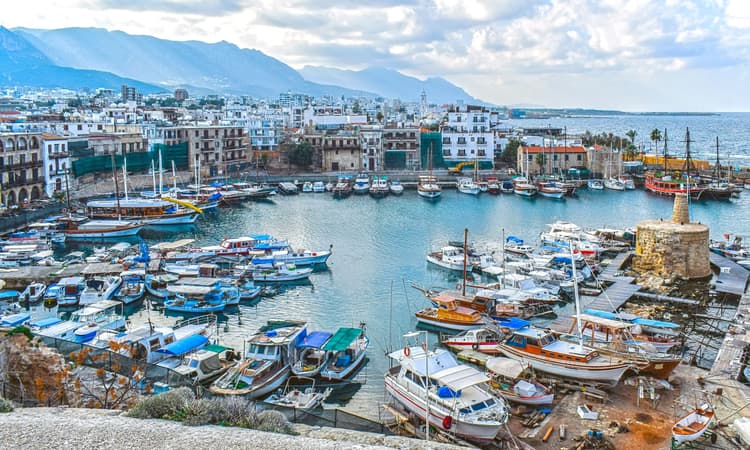
Cyprus: Europe’s Sunniest Destination – 300+ Sunny Days
Explore Cyprus, Europe’s sunniest destination with 300+ sunny days a year. Discover top resorts, best seasons to visit, and why it’s perfect for a holiday.
Read more

Belly Fat and Aging: New Scientific Discoveries
Recent research reveals how belly fat accelerates aging, boosts inflammation, and increases Alzheimer's risk—discover key health insights and prevention tips.
Read more
.jpg&w=750&q=75)
Burning Fat with Your Mind: How “Remembering” Cold Activates Brown Fat and Boosts Metabolism
Discover how recalling cold memories can trigger your brain to activate brown fat, boost metabolism, and aid weight loss—even from the comfort of a warm room.
Read more
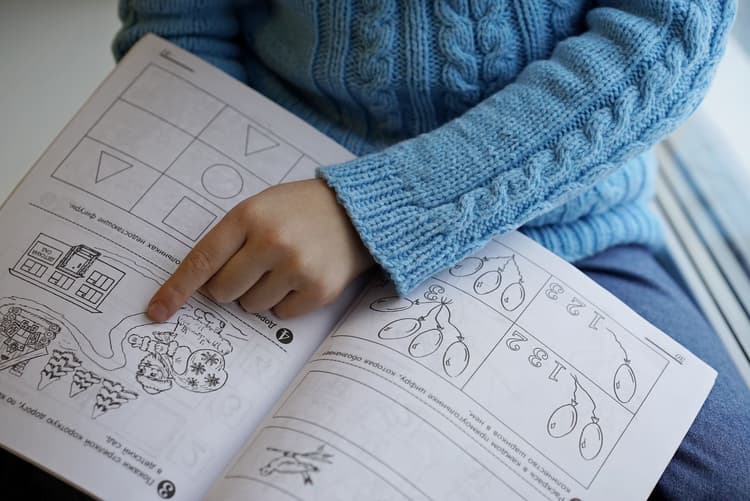
Bridging the Education Gender Gap: Why Boys Fall Behind and How to Close It
Boys globally lag in language skills due to peer influence, stereotypes, and systemic issues—discover causes, impacts, and strategies to close the education gender gap.
Read more
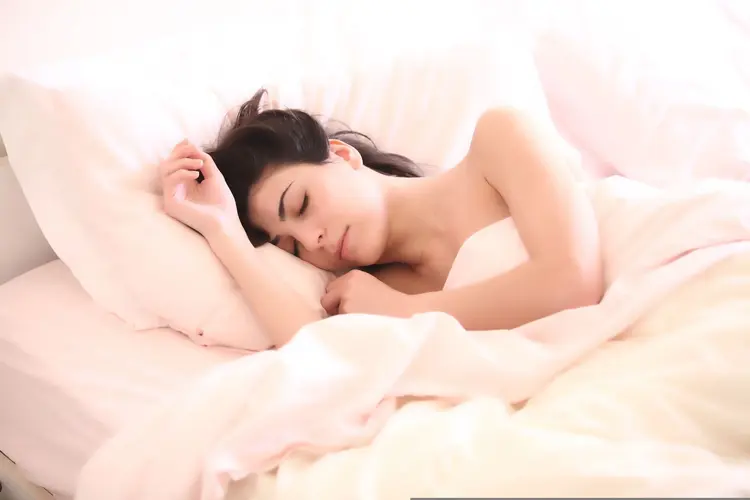
How Intense Evening Workouts Disrupt Sleep, Says Monash University Study
Intense workouts within 4 h of bedtime delay sleep, cut duration, raise resting heart rate, and impair recovery, shows Monash University’s year‑long study.
Read more
Latest News
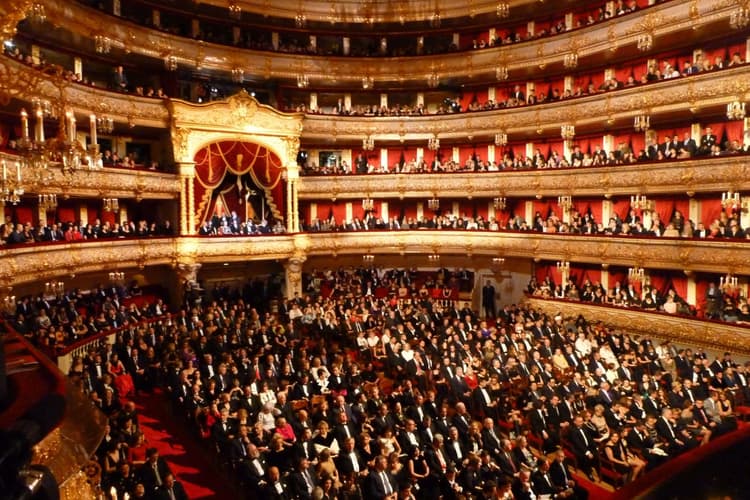
MHT vs MHAT: What’s the Difference Between Moscow’s Two Legendary Art Theatres
MHT and MHAT: what’s the difference between Moscow’s legendary art theatres? History, split of 1987, traditions, repertoires, and key distinctions explained.
Read more
.jpg&w=750&q=75)
Alexander Pushkin: Life, Exile, and Literary Legacy
A concise biography of Alexander Pushkin: childhood, exile, major works, family life, tragic death, and enduring legacy in Russian culture.
Read more
.jpg&w=750&q=75)
VDNKh Ice Rink 2025–2026: Season Opening, Prices, Schedule & Events
VDNKh ice rink opens 25 Nov 2025–1 Mar 2026. >20k m², tickets from 300₽, night sessions & events.
Read more
%20(1).jpg&w=750&q=75)
New Year 2025-2026 at VDNKh: Festive Program, Ice Shows and Skating Rink
VDNKh New Year 2025-26: huge fair, ice shows, theater, kids events & biggest rink. Dec 25-Jan 11, open daily till 23:00. Festive magic for all!
Read more
.jpg&w=750&q=75)
New Year's Moscow: A Magical Winter Fairy Tale 2025–2026
New Year's Moscow: sparkling lights, ice rinks, festive markets & fairy-tale decor on Red Square, Tverskaya, VDNH, GUM. Magical winter wonderland!
Read more