
.jpg&w=640&q=75)
9 min. to read
History of the Monument's Creation
From Ancient Roman Traditions to Modernity
The tradition of marking the starting point of roads dates back to Ancient Rome. It was there, in 20 BC, that the legendary "Golden Milestone" — a column of gilded bronze — was erected, from which all the main roads of the Roman Empire began. This gave rise to the famous saying "all roads lead to Rome."The Appearance of the Moscow Sign
The Moscow monument was installed relatively recently — in 1996. Interestingly, the bronze elements of the composition were made back in the 1980s and were originally planned to be placed on Red Square between GUM and the Mausoleum. However, approvals dragged on, and the metal structure lay in storage for more than ten years. In 1995, Moscow authorities returned to discussing the project, considering fourteen possible locations, including Red Square, Tverskaya Square, and Teatralnaya Square. In the end, the site near the Resurrection Gates — one of the most historic corners of the capital — was chosen.Where the Real Zero Kilometer Is Actually Located
Three Reference Points in Moscow
Many visitors are convinced that the monument on Manezhnaya Square is the real point for measuring distances. However, this is a common misconception. In fact, there are several zero kilometers in Moscow: Central Telegraph — it is from here that road distances from the Russian capital are officially measured. The building is located at the intersection of Tverskaya Street and Gazetny Lane. This tradition is linked to the development of wired communication and the replacement of horse-drawn mail carriages with telegraph messaging. MKAD (Moscow Ring Road) has its own kilometer reference point, located at the intersection of the Moscow Ring Road with Entuziastov Highway. Yaroslavsky Railway Station — between the third and fourth tracks is the mark of the starting point for railway transport distances. From here begins the famous Trans-Siberian Railway — the longest railway in the world.Historical Note on the Tradition of Measuring Distances
In the era of the Russian Empire, the starting point of all routes was considered the Moscow Post Office building on Myasnitskaya Street, which operated from the late 18th century. When the capital functions were transferred to Saint Petersburg, the zero kilometer was located in the main post office of the northern capital for almost two hundred years — from 1814 until the early 20th century.Architectural Features of the Composition
Authors of the Project
The monument was created based on a joint project by the outstanding Russian architect I. N. Voskresensky and the renowned sculptor A. I. Rukavishnikov, a master of monumental compositions.Description of the Structure
The sign is made in the form of a compass with the "Wind Rose" symbol. In the center of the bronze disk is the number "0", which has almost been worn away by the feet of numerous visitors. Around the circumference is the inscription "Zero Kilometer of the Highways of the Russian Federation". The composition is a circle inscribed in a square made of dark tiles. Along the edges of the bronze covering are four corner arrows pointing to the cardinal directions. On each of them are depicted characteristic animals symbolizing the fauna of the corresponding regions: North: reindeer, polar owl, and seal — representatives of Arctic nature. South: dolphin, tur (wild goat), and griffin — inhabitants of warm latitudes. West: capercaillie, European bison, and eel — typical species of the European part. East: cobra, tiger, and toucan — symbols of exotic Asian nature.Traditions and Rituals at the Zero Kilometer
How to Properly Make a Wish
Despite the young age of the landmark, a well-established tradition of making wishes has formed around it. Hundreds of people come to the monument every day to perform a special ritual. According to the belief, for the wish to come true, you must: Stand in the center of the bronze sign on one foot. Face the Iverian Chapel. Close your eyes and concentrate on the wish. Throw a coin with your left hand over your left shoulder. The coin must remain within the metal circle — its denomination does not matter.The Spiritual Component of the Tradition
The custom of throwing coins is connected to the history of the place. In the past, travelers came here to bow to the Iverian Chapel, where a copy of the miraculous icon of the Mother of God (Gatekeeper) was kept for a long time. People asked the intercessor for protection on the road and blessings for a long journey.How to Get to the Zero Kilometer
Nearby Metro Stations
The nearest station is "Okhotny Ryad" on the Sokolnicheskaya Line (red line). From the seventh exit, it is just a one-minute walk to the monument. It is also convenient to arrive from the stations: "Teatralnaya" on the Zamoskvoretskaya Line (green line) — 210 meters from the landmark. "Ploshchad Revolyutsii" on the Arbatsko-Pokrovskaya Line (blue line). "Aleksandrovsky Sad" on the Filyovskaya Line (light blue line).Ground Transport
Buses m2, m3, m10, m27, as well as night routes n1, n2, n11, and regular routes 101, 144, 904 go to the "Manezhnaya Ploshchad" stop. The "Metro Okhotny Ryad" stop is served by buses m1, m10, n1, 101, and 904. To the "Krasnaya Ploshchad" stop, you can take buses m5 and 158.Attractions Near the Zero Kilometer
The monument is located in the very historic center of Moscow, surrounded by iconic sites: Red Square — the country's main square is just a few steps from the sign. Moscow Kremlin — the ancient fortress and seat of power. State Historical Museum — the largest collection of exhibits on Russian history. GUM — the legendary shopping center with unique architecture. Saint Basil's Cathedral — a symbol of Russian architecture with colorful domes. Alexandrovsky Garden — a green recreation area with memorials. Bolshoi Theatre — the world-famous temple of opera and ballet art.Interesting Facts About the Zero Kilometer
The bronze disk is gradually wearing away from the millions of tourists' feet — the number "0" in the center of the composition is already almost invisible. There are hundreds of similar signs around the world in different cities and countries, many of which are marked not just by plaques but by entire architectural structures — towers, bridges, or historic buildings. The monument has become such a popular spot for photos that many visitors stand with their backs to the Iverian Chapel, although tradition calls for facing it. Every year, thousands of coins are left at the Zero Kilometer by those making wishes — they are periodically collected by maintenance services.Conclusion
The Zero Kilometer in Moscow is more than just a monument. It is a symbolic place where past and present meet, where ancient traditions intertwine with modern urban culture. Even though the real road measurements start from other points in the capital, the bronze sign near the Resurrection Gates has become a true magnet for tourists and a favorite spot for Muscovites. Visiting the Zero Kilometer perfectly complements a walk through Moscow's historic center, viewing the Kremlin and Red Square. It is an essential point for everyone who wants to touch the symbolic beginning of all Russian roads and, perhaps, make a cherished wish in the very heart of the capital..jpg&w=750&q=75)
Sights Nearby


Latest Articles
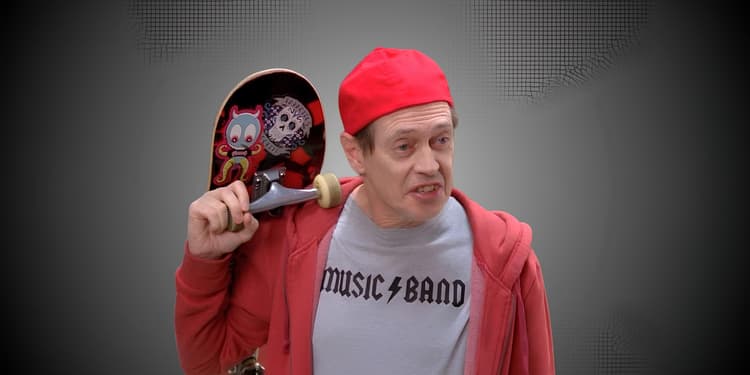
Who Is an “Ank” and What Does This Slang Term Mean
A detailed explanation of the slang term “ank,” its origin, traits, cultural meaning, ironic use by zoomers, and its role in modern youth language.
Read more

What Is Tilt: Causes, Signs, and How to Regain Emotional Control
Tilt is a state of emotional overload where rational thinking breaks down and impulsive actions take over, common in games, work, trading, and everyday life.
Read more

Phishing in 2026: Types, Risks, and How to Protect Your Data
Phishing uses AI and fake sites to steal data. Learn types, signs, protection methods, and actions if targeted to stay safe online.
Read more
%20(1).jpg&w=750&q=75)
Cyberbullying: Types, Consequences, and How to Protect Yourself
Cyberbullying is online psychological abuse with serious mental, social, and physical consequences; anyone can be a victim, and prevention requires awareness and action.
Read more

“KFC Boss”: Meaning, Origin, and Why This Slang Term Is Considered Offensive
Explanation of the slang term “KFC Boss,” its meaning, origins, usage online, why it’s offensive, and how people respond to and protect themselves from it.
Read more