

11 min. to read
History of the Chekhov Moscow Art Theatre
Foundation of the theatre and the revolution in dramaturgy
The Moscow Art Theatre was founded in 1898 by two outstanding reformist directors — Konstantin Sergeyevich Stanislavsky and Vladimir Ivanovich Nemirovich-Danchenko. The opening of the theatre took place with the production of “Tsar Fyodor Ioannovich” based on the play by A.K. Tolstoy, which immediately won public acclaim. The true birth of the Art Theatre is associated with the name of the great Russian playwright Anton Pavlovich Chekhov. It was precisely through work on his plays — “The Seagull,” “Uncle Vanya,” “Three Sisters,” and “The Cherry Orchard” — that a unique theatrical method was formed. After the theatre’s first triumph, connected with the staging of “The Seagull,” the seagull soaring above the waves became the symbol of the Moscow Art Theatre.Formation of the Stanislavsky system
Within the walls of the Moscow Art Theatre, such concepts as “Russian psychological theatre” and “director’s theatre” were born. It was here that the famous “Stanislavsky system” was formulated and tested, revolutionizing ideas about the art of acting. In work on Chekhov’s plays, as well as on Maxim Gorky’s works “The Philistines” and “The Lower Depths,” a new type of actor was shaped, capable of subtly conveying a character’s psychology.Architectural features of the theatre building
History of the building in Kamergersky Lane
The Chekhov Moscow Art Theatre building is located in the former estate of P.I. Odoevsky. The history of this site dates back to the 14th century, when the lands belonged to a voivode of Dmitry Donskoy. In 1882, commissioned by Lianozov, architect M.N. Chichagov rebuilt the house for theatrical use, placing the stage in the courtyard between the buildings.Reconstruction by Fyodor Shekhtel
In 1902, the patron S.T. Morozov leased the building specifically for the Art Theatre and entrusted its reconstruction to the genius of Russian Art Nouveau, Fyodor Shekhtel. The renovation cost 300,000 rubles, while the architect completed the project free of charge. Shekhtel created an elegant temple of art, thinking through everything down to the smallest detail — from the interiors to the stage curtain with an ornamental swirl pattern and an image of a seagull. At the entrance to the small stage, a bas-relief by sculptor A.S. Golubkina, “The Sea of Life” (also known as “The Wave” or “The Swimmer”), was installed, symbolizing the theatre’s creative quest. In 1903, the building acquired its own power station and an extension for the small stage.The Moscow Art Theatre in the Soviet era and the period of division
Receiving academic theatre status
In 1918, V.I. Lenin himself spoke out in support of preserving the theatre. In 1920, the theatre was elevated to academic status and received the name MXAT. However, in the 1950s, the theatre experienced a serious crisis and began to decline.Division of the company
In 1970, Oleg Yefremov was appointed artistic director, under whom the famous split occurred. In March 1987, the theatre collective divided into two companies: the A.P. Chekhov Moscow Art Theatre under Yefremov in Kamergersky Lane and the Maxim Gorky Moscow Art Theatre under Tatyana Doronina on Tverskoy Boulevard. Colloquially, it was said that the Moscow Art Theatre had split into a “men’s” and a “women’s” theatre.The modern stage of the theatre’s development
Renewal under the leadership of Oleg Tabakov
After Yefremov’s death in 2000, Oleg Tabakov became artistic director, setting a course toward renewing the repertoire and beginning active collaboration with contemporary playwrights. In 2004, the word “academic” was removed from the name, and since then the theatre has been officially known as the A.P. Chekhov Moscow Art Theatre.Leadership of Konstantin Khabensky
Today, the Moscow Art Theatre is headed by Konstantin Khabensky, who aligns himself with the best of his predecessors. Carefully preserving traditions, he continues the search for the new: new talents, a new theatrical language, new meanings, and forms. Since 2018, the artistic director has been Sergei Zhenovach — a talented director and laureate of numerous theatre awards.Reconstruction and technical equipment
In the late 1970s, the building underwent a major reconstruction, although few authentically Shekhtelian elements remained afterward. In 2006–2007, a large-scale renovation of the Main Stage and auditorium was carried out, thanks to which the Moscow Art Theatre became one of the most technically equipped theatres in the world. The upper and lower stage machinery, sound and lighting equipment were modernized, and the hall regained its historical appearance.Three stages of the theatre
Today, the Moscow Art Theatre has three stages located in a single building in Kamergersky Lane: the Main Stage, the Small Stage, and the New Stage, opened in 2001. In the first three decades of the theatre’s existence, it had only one stage at its disposal; later it was given a building in Petrovsky Lane with a hall seating 1,047 spectators.Repertoire of the Chekhov Moscow Art Theatre
Classical drama
The theatre stages both classical works of world drama — “Hamlet,” “The Cherry Orchard,” “The Golovlyov Family,” “The White Guard,” “King Lear,” “Tartuffe” — as well as contemporary Russian and foreign drama. Plays were written especially for the Art Theatre by A.P. Chekhov, M. Gorky, and M.A. Bulgakov.Popular productions
Today’s repertoire of the Moscow Art Theatre includes more than 60 productions. Among the most popular is the comedy “An Ideal Husband” by Oscar Wilde, which has won the prestigious “Theatre Star” and “Golden Mask” awards. The comedy “Leading Ladies,” which premiered in 2006, remains relevant. The repertoire also features dramas such as “Flight” and “The Master and Margarita” based on Bulgakov, classical works “The Merchant of Venice” and “The Forest,” as well as Chekhov’s “Three Sisters” and “The Cherry Orchard.”The theatre company and directors
The Moscow Art Theatre company has always consisted of celebrated masters, stars of the highest rank. Outstanding directors began their creative paths here — from E. Vakhtangov and V. Meyerhold to those who today head leading theatres of the capital. Many actors of the Moscow Art Theatre are well known to the general public through films and television series. The company includes Alexander Livanov, Irina Miroshnichenko, Daria Moroz, Svetlana Ustinova, Konstantin Khabensky, Mikhail Porechenkov, Dmitry Nazarov, Paulina Andreeva, Igor Vernik, and many other artists. Productions here have been staged by Vladimir Mashkov, Renata Litvinova, Mindaugas Karbauskis, Oleg Yefremov, Evgeny Grishkovets, and Konstantin Bogomolov.Memory of Chekhov and cultural initiatives
In 2010, the Moscow Art Theatre established a commemorative medal marking the 150th anniversary of Anton Pavlovich Chekhov, awarded to outstanding cultural figures of Russia and foreign countries. In September 2014, a monument to the founders — Stanislavsky and Nemirovich-Danchenko — was unveiled in front of the theatre building, symbolizing the contribution of the two reformers to the history of world theatre. The building is adorned with the sculptural composition “Chekhov’s Seagull,” dedicated to the great writer.Cultural activities of the theatre
The modern Art Theatre is a vibrant life across three Moscow Art Theatre stages, experimental directing laboratories, literary and musical evenings, and creative meetings with artists. The theatre holds awards and competitions for talented young people in various fields of art, organizes exhibitions and lectures, and engages in publishing activities. The Moscow Art Theatre School-Studio (founded in 1943) and the Moscow Art Theatre Museum (1923) operate under the theatre. The theatre actively participates in festivals, conducts master classes and educational programs, combining tradition and innovation, maintains an active presence on social media, and carries out numerous joint projects with the Museum and the School-Studio of the Moscow Art Theatre.Practical information for visitors
Opening hours and schedule
Performances at the Chekhov Moscow Art Theatre take place daily, usually at 7:00 p.m., sometimes simultaneously on three stages. The box office is open from 12:00 to 7:30 p.m. without days off. The current playbill is available on the official website mxat.ru, where schedules for the current and following months can be found.Tickets and prices
Ticket prices at the Chekhov Moscow Art Theatre range from 600 to 30,000 rubles, depending on the performance and the selected seat. Tickets at face value are sold only at the theatre’s box office; intermediary services charge a commission. Tickets can be purchased online on the official website or directly at the box office. Free reservation is also available by phone at +7 (495) 646-36-46 and +7 (495) 692-67-48.How to get to the theatre
The A.P. Chekhov Moscow Art Theatre is located in the historic center of the capital at the address: Kamergersky Lane, building 3. The nearest metro stations are “Teatralnaya,” “Okhotny Ryad,” and “Ploshchad Revolyutsii”. From the “Teatralnaya” station, exit onto Bolshaya Dmitrovka Street and walk to Kamergersky Lane. From “Okhotny Ryad,” you can walk along Tverskaya Street and turn right into the lane.Cultural significance of the Moscow Art Theatre
The Moscow Art Theatre continues to remain a center for the development of Russian and world theatrical culture. It brings together outstanding actors, directors, and teachers, shaping new generations of performers. The Moscow Art Theatre carried out a reform of the repertoire and changed perceptions of stage art, becoming the first theatre of such scale in Russia. Thanks to the balance between tradition and contemporary art, the A.P. Chekhov Moscow Art Theatre remains a place where the history of theatre meets innovative approaches, where under the wing of the symbolic seagull true stage magic is born.
Sights Nearby


.jpg&w=750&q=75)


.jpg&w=750&q=75)

.jpg&w=750&q=75)


Latest Articles
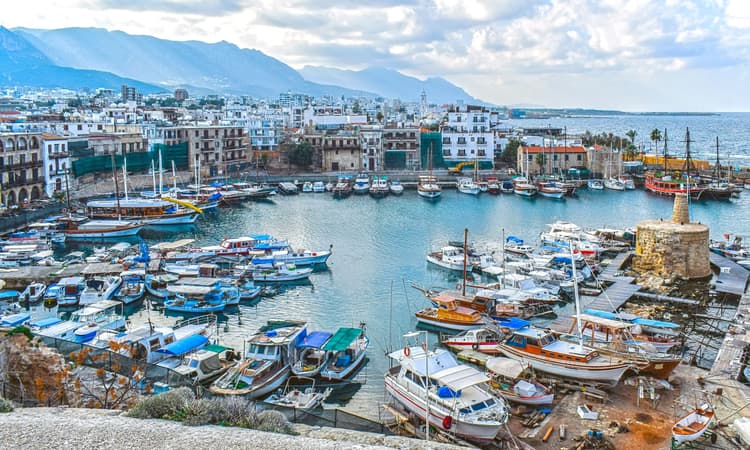
Cyprus: Europe’s Sunniest Destination – 300+ Sunny Days
Explore Cyprus, Europe’s sunniest destination with 300+ sunny days a year. Discover top resorts, best seasons to visit, and why it’s perfect for a holiday.
Read more

Belly Fat and Aging: New Scientific Discoveries
Recent research reveals how belly fat accelerates aging, boosts inflammation, and increases Alzheimer's risk—discover key health insights and prevention tips.
Read more
.jpg&w=750&q=75)
Burning Fat with Your Mind: How “Remembering” Cold Activates Brown Fat and Boosts Metabolism
Discover how recalling cold memories can trigger your brain to activate brown fat, boost metabolism, and aid weight loss—even from the comfort of a warm room.
Read more
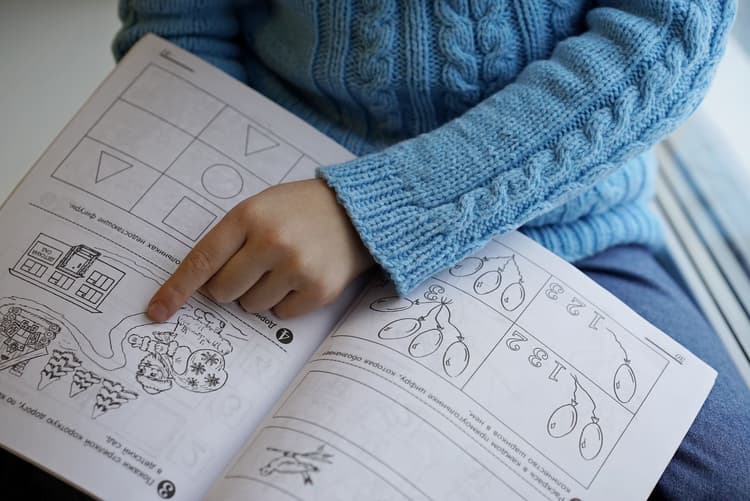
Bridging the Education Gender Gap: Why Boys Fall Behind and How to Close It
Boys globally lag in language skills due to peer influence, stereotypes, and systemic issues—discover causes, impacts, and strategies to close the education gender gap.
Read more

How Intense Evening Workouts Disrupt Sleep, Says Monash University Study
Intense workouts within 4 h of bedtime delay sleep, cut duration, raise resting heart rate, and impair recovery, shows Monash University’s year‑long study.
Read more
Latest News
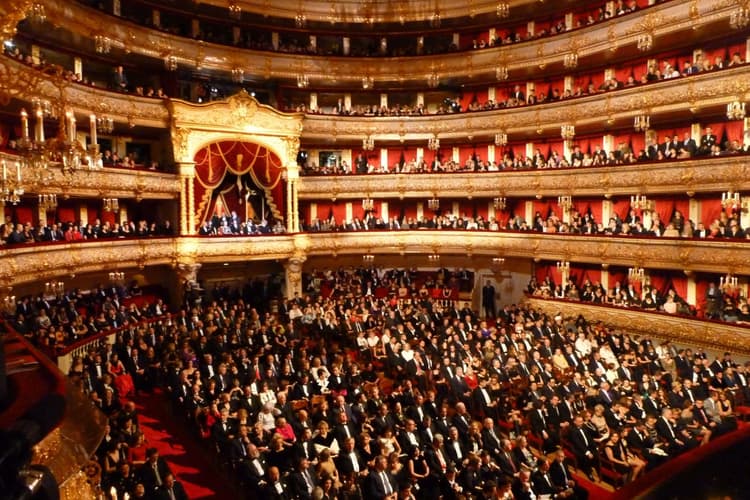
MHT vs MHAT: What’s the Difference Between Moscow’s Two Legendary Art Theatres
MHT and MHAT: what’s the difference between Moscow’s legendary art theatres? History, split of 1987, traditions, repertoires, and key distinctions explained.
Read more
.jpg&w=750&q=75)
Alexander Pushkin: Life, Exile, and Literary Legacy
A concise biography of Alexander Pushkin: childhood, exile, major works, family life, tragic death, and enduring legacy in Russian culture.
Read more
.jpg&w=750&q=75)
VDNKh Ice Rink 2025–2026: Season Opening, Prices, Schedule & Events
VDNKh ice rink opens 25 Nov 2025–1 Mar 2026. >20k m², tickets from 300₽, night sessions & events.
Read more
%20(1).jpg&w=750&q=75)
New Year 2025-2026 at VDNKh: Festive Program, Ice Shows and Skating Rink
VDNKh New Year 2025-26: huge fair, ice shows, theater, kids events & biggest rink. Dec 25-Jan 11, open daily till 23:00. Festive magic for all!
Read more
.jpg&w=750&q=75)
New Year's Moscow: A Magical Winter Fairy Tale 2025–2026
New Year's Moscow: sparkling lights, ice rinks, festive markets & fairy-tale decor on Red Square, Tverskaya, VDNH, GUM. Magical winter wonderland!
Read more