
10 min. to read
History of the Theater’s Creation
The Birth of a Creative Collective
The official founding date of the theater is considered to be July 1993, when, by a decree of the Moscow government, a new theatrical institution was established under the leadership of Pyotr Fomenko. However, the actors of the theater, known in professional circles as the “fomenki,” trace the history of the collective back to July 1988. It was then that Pyotr Naumovich recruited a group of students into his educational workshop at the directing faculty of GITIS, now known as the Russian University of Theatre Arts. Five years of joint study showed that the people brought together were capable of creating true theatrical miracles. Student productions of the workshop repeatedly became prizewinners at theater festivals. The production “Vladimir of the Third Degree” based on Gogol won first prize from the youth jury at the international festival “Podium-91,” while “Wolves and Sheep” by Ostrovsky received the grand prize of the Polish festival “Kontakt” in 1993.Pyotr Naumovich Fomenko — Founder of the Theater
Pyotr Naumovich Fomenko was an outstanding Soviet and Russian theater and film director, as well as a teacher, who created around 60 original productions in theaters in Moscow, Saint Petersburg, Wrocław, Paris, Tbilisi, and Salzburg. The master’s works were distinguished by originality, musicality, and vivid theatricality. Pyotr Naumovich passed away in August 2012 at the age of 80, leaving behind a rich creative legacy.Theater Buildings: From the “Kiev” Cinema to a Modern Complex
The Old Stage on Kutuzovsky Prospekt
In 1997, the theater was given the premises of the former “Kiev” cinema on Kutuzovsky Prospekt. The building housed two small halls, each accommodating no more than one hundred spectators. Despite the limited space, the performances were extremely popular — reservations for some productions were made six months in advance. Before acquiring its own venue, the troupe led a nomadic lifestyle for more than four years, performing in the halls of other theaters and at concert venues.The New Building on Taras Shevchenko Embankment
In January 2008, the theater moved into a building specially constructed for it at Taras Shevchenko Embankment, 29. The new home of the theater is designed in a modern architectural style with elements of minimalism. The building is clad in natural stone using aluminum and steel panels, and the roof features a lawn and a flower garden. From the spacious foyer, which is a long hall with huge windows, a picturesque panorama of the Moscow River and the Moscow City business center opens up. The interior space was designed with the requirements of Pyotr Fomenko himself in mind — the theater does not suffer from a lack of natural light and has sufficient space for work.Theater Halls
The new building contains two stage venues. The Main Hall seats 450 spectators and is designed in a classical style with boxes, an amphitheater, and stalls. Its transformable apron stage allows for an orchestra pit of varying depth, and if necessary, the action of the performance can unfold directly in the auditorium. The Small Hall accommodates 150 spectators and is equipped with a complex of lifting mechanisms and transformable panels. With their help, it is possible to change the dimensions and proportions of the hall, as well as to open the space to the external environment — the embankment with a panoramic view of the capital.Repertoire and Creative Principles
Theatrical Philosophy
The “Pyotr Fomenko Workshop” harmoniously combines the traditions of the Russian repertory theater with a striving for experimentation and creative exploration. Various directors work with the troupe, each receiving the opportunity to realize their ideas in a wide range of stylistic approaches. The main task of the theater is the continuous improvement of the actors’ skills, the preservation of freshness of perception, and constant creative development.Landmark Productions
Over the years of the theater’s existence, more than 50 productions have been created, of which about 40 are part of the current repertoire. A benchmark work is considered to be the performance “One Absolutely Happy Village” based on the novella by Boris Vakhtin. This chamber production is staged in the small hall, which makes it possible to create a special atmosphere of the audience’s involvement in what is happening on stage. The performance has been successfully running for more than ten years. Among other significant productions are “War and Peace” and “Family Happiness” by Tolstoy, “The Dowryless Bride” by Ostrovsky, “Three Sisters” by Chekhov, “Ulysses” based on Joyce, “Ruslan and Lyudmila” by Pushkin, “Olympia,” and “A Midsummer Night’s Dream” by Shakespeare. The repertoire includes works by Pyotr Fomenko himself, as well as by his students and colleagues — Yevgeny Kamenkovich, Sergey Zhenovach, Ivan Popovski, and other directors.Awards and Recognition
The theater’s productions have repeatedly become laureates of prestigious awards. Among the honors is the national theater award “Golden Mask” for the productions “One Absolutely Happy Village,” “War and Peace,” “Three Sisters,” “The Most Important Thing,” “Triptych,” and “A Midsummer Night’s Dream.” The theater has also received the Stanislavsky Prize and the independent award “Crystal Turandot.”Contemporary Life of the Theater
The Troupe
Today, the theater’s troupe includes 50 actors, 2 directors, and 6 trainees. The theater regularly replenishes its ranks with young talents through its internship system. The first group of trainees was recruited in the spring of 2007, and most of its participants were subsequently accepted into the permanent troupe.Features for Audiences
The style of the actors of the “Pyotr Fomenko Workshop” is marked by boldness and expressiveness. The theater provides opportunities for both renowned artists and young graduates of theatrical universities to showcase their talent. This has predetermined the popularity of the performances among audiences of all ages, especially young people. Tickets for some productions are booked a year in advance.Subtitling System
A unique feature of the theater is its own system of performance subtitling. Foreign guests and people with hearing impairments receive a tablet before the performance, on the screen of which subtitles of the actors’ dialogues appear in the selected language. The service is available for almost all performances in the main hall. The list of subtitled productions and the number of available languages are constantly expanding.Additional Projects
The theater houses a museum with interesting exhibits that tell the story of its history. Art lovers can take guided tours during which visitors can see dressing rooms, costume workshops, and sets from popular productions. The theater actively develops additional areas of activity. Concerts by invited musicians and troupe artists are held regularly, exhibitions of painting, photography, and theatrical costume are organized in the foyer, and a lecture series and a children’s program “Journey into Theatrical History” are in operation.Experimental Direction
Since 2013, the theater has opened an experimental direction for audiences titled “Trial and Error”. Within its framework, actors and directors present their independent work on literary pieces to the public. Some of these experiments later grow into full-fledged productions and become part of the main repertoire.Tours and Festivals
The theater actively participates in Russian and international theater festivals. Productions of the “Pyotr Fomenko Workshop” have been shown at the “Golden Mask” festival, the International Chekhov Festival, the Venice Biennale, the Avignon Festival, Belgrade’s BITEF, at Lincoln Center in New York, and many other prestigious venues. The company has successfully toured cities across Russia, Ukraine, the Baltic states, Europe, Latin America, the USA, China, Israel, and Japan.Information for Visitors
Theater Addresses
The theater is located at two addresses in Moscow: — New Stage: Taras Shevchenko Embankment, 29 — Old Stage: Kutuzovsky Prospekt, 30/32How to Get There
The most convenient way to get there is by metro to the “Kutuzovskaya” station of the Filyovskaya line. After exiting the metro, go down into the underpass, walk to the end, and turn left. Then walk straight toward the Moscow City International Business Center and the embankment. The walk from the metro takes about three minutes. The old and new theater buildings are located opposite each other across the road.Useful Services
Information about ticket availability and performance subtitling can be obtained on the official theater website or at the box office. The information desk operates daily from 12:00 to 19:30.Conclusion
The “Pyotr Fomenko Workshop” is a living organism of contemporary theatrical art, where traditions are carefully preserved and experimentation is not feared. The theater continues to develop, opening new areas of activity and attracting young talents. Each production becomes an event in Moscow’s cultural life, and the original directorial interpretations of classical works invariably surprise and delight audiences of all generations.
Sights Nearby


.jpg&w=750&q=75)

.jpg&w=750&q=75)


.jpg&w=750&q=75)
.jpg&w=750&q=75)


Latest Articles
Cyprus: Europe’s Sunniest Destination – 300+ Sunny Days
Explore Cyprus, Europe’s sunniest destination with 300+ sunny days a year. Discover top resorts, best seasons to visit, and why it’s perfect for a holiday.
Read more

Belly Fat and Aging: New Scientific Discoveries
Recent research reveals how belly fat accelerates aging, boosts inflammation, and increases Alzheimer's risk—discover key health insights and prevention tips.
Read more
.jpg&w=750&q=75)
Burning Fat with Your Mind: How “Remembering” Cold Activates Brown Fat and Boosts Metabolism
Discover how recalling cold memories can trigger your brain to activate brown fat, boost metabolism, and aid weight loss—even from the comfort of a warm room.
Read more
Bridging the Education Gender Gap: Why Boys Fall Behind and How to Close It
Boys globally lag in language skills due to peer influence, stereotypes, and systemic issues—discover causes, impacts, and strategies to close the education gender gap.
Read more

How Intense Evening Workouts Disrupt Sleep, Says Monash University Study
Intense workouts within 4 h of bedtime delay sleep, cut duration, raise resting heart rate, and impair recovery, shows Monash University’s year‑long study.
Read more
Latest News
.jpg&w=750&q=75)
Alexander Pushkin: Life, Exile, and Literary Legacy
A concise biography of Alexander Pushkin: childhood, exile, major works, family life, tragic death, and enduring legacy in Russian culture.
Read more
.jpg&w=750&q=75)
VDNKh Ice Rink 2025–2026: Season Opening, Prices, Schedule & Events
VDNKh ice rink opens 25 Nov 2025–1 Mar 2026. >20k m², tickets from 300₽, night sessions & events.
Read more
%20(1).jpg&w=750&q=75)
New Year 2025-2026 at VDNKh: Festive Program, Ice Shows and Skating Rink
VDNKh New Year 2025-26: huge fair, ice shows, theater, kids events & biggest rink. Dec 25-Jan 11, open daily till 23:00. Festive magic for all!
Read more
.jpg&w=750&q=75)
New Year's Moscow: A Magical Winter Fairy Tale 2025–2026
New Year's Moscow: sparkling lights, ice rinks, festive markets & fairy-tale decor on Red Square, Tverskaya, VDNH, GUM. Magical winter wonderland!
Read more
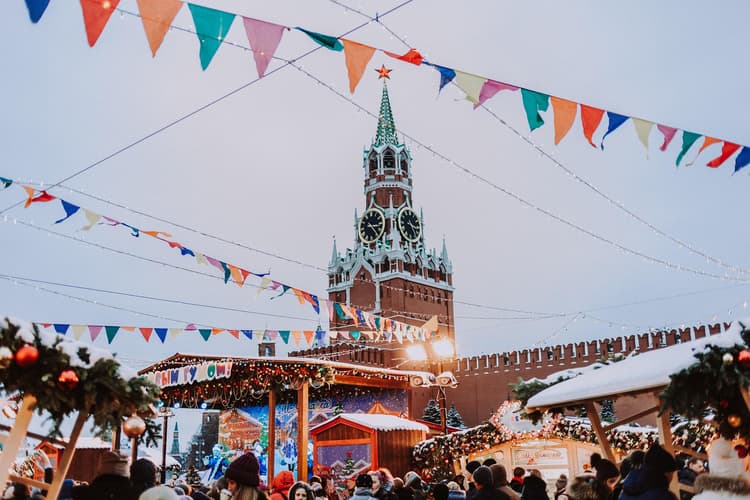
New Year’s Eve 2026 on Red Square: Access, Tickets, and Festivities
New Year’s Eve on Red Square: ticketed entry only, festive rink, market, events, decorations, and free city transport all night.
Read more