

10 min. to read
Opening hours: Saturday–Wednesday 10:00–18:00, Thursday 10:00–21:00, Friday — closed
Official website: 1812panorama.ru
History of the museum complex
The museum’s history is inextricably linked with the events of September 1812, when the village of Fili stood on the site of today’s Kutuzovsky Prospekt. It was here, in a modest peasant hut, that Field Marshal Mikhail Kutuzov held the historic Military Council at which the fateful decision was made to abandon Moscow without a fight in order to preserve the army.Key milestones in the museum’s development
- 1883 — a memorial obelisk was erected on the historic site
- 1887 — “Kutuzov’s Hut” was reconstructed according to the design of architect Dmitry Strukov, becoming one of the first museums of the 1812 war in Russia
- 1912 — for the centenary of the Battle of Borodino, the grandiose panorama by Franz Roubaud was created and first shown in a wooden pavilion on Chistye Prudy
- 1912 — the Chapel of the Archangel Michael was built and consecrated next to the museum
- 1962 — the permanent Borodino Battle Museum-Panorama was solemnly opened on Kutuzovsky Prospekt to mark the 150th anniversary of the victory
- 1967 — a tragic fire destroyed 60% of the canvas; restoration took several months
The grandiose panorama by Franz Roubaud
The central treasure of the museum is the monumental panorama “Borodino,” created by the outstanding Russian battle painter Franz Alekseevich Roubaud. This painted canvas impresses with its scale — 115 meters long and 15 meters high, making it one of the largest paintings in the world. The artist captured the decisive moment of the general battle on September 7, 1812, between the Russian army and Napoleon’s troops. The circular arrangement of the panorama in a specially designed hall, complemented by a three-dimensional foreground with terrain relief and carefully planned lighting, creates an astonishing effect of complete immersion. Visitors literally find themselves in the thick of the battle, experiencing its drama and heroic intensity. Interesting fact: The panorama was created by a professor of the Imperial Academy of Arts with strict adherence to historical accuracy. Every figure is meticulously drawn, and the masterful use of light and shadow emphasizes the drama of the events.The museum’s richest collections
The Borodino Battle Museum-Panorama possesses one of the world’s largest collections of artifacts from the Napoleonic Wars era. The museum’s holdings number more than 48,000 items, of which about 400 are on permanent display.Main exhibition sections
Battle and portrait painting — the museum features works by 19th- and 20th-century artists depicting the heroes and key events of the Patriotic War. Particular attention deserves Viktor Mazurovsky’s 1912 painting “Fight for the Banner. The Feat of the Horse Guards Gavrilon and Omelchenko at Austerlitz.” Military equipment and weapons — a unique collection that includes authentic 19th-century uniforms and equipment, weapons from the 14th–20th centuries, models of artillery pieces, and copies of historical banners of the Russian and French armies. Documentary materials — rare book editions and albums about the Patriotic War of 1812, military maps, personal letters from battle participants, historical photographs, and watercolors. Art and everyday objects — busts and bas-reliefs of outstanding commanders, imperial court porcelain and glass, personal belongings of commanders and officers, and decorative-applied art objects from the military era.The “Kutuzov’s Hut” Museum
An integral part of the memorial complex is the “Kutuzov’s Hut” museum with the exhibition “The Hut of the Military Council.” Visitors are greeted by the authentic atmosphere of an early 19th-century peasant house: icons in the “red corner,” a traditional Russian stove, simple wooden furniture. The exhibition meticulously recreates the events of the famous Military Council of September 13, 1812. Here one can learn about the participants of the historic meeting, understand the logic behind the decision taken, and appreciate its impact on the further course of the war. Visits are possible only as part of a guided tour, which provides a full understanding of the significance of this place. Historical detail: In 1894, a carriage shed was built next to the hut to house Mikhail Kutuzov’s campaign carriage — an invaluable gift to the museum from the great commander’s great-grandson.Educational programs and tours
The museum-panorama offers a variety of educational events for different visitor categories:- General guided tours of the museum halls and the park territory of the memorial complex
- Children’s programs based on Mikhail Lermontov’s poem “Borodino,” with interactive elements and quests
- Teen tours with in-depth study of Leo Tolstoy’s novel “War and Peace”
- Specialized programs for Sunday school pupils, art college students, and foreign-language learners
- Lectures and master classes on the history of the 1812 war, battle strategy and tactics, and museology
Seasonal events and cultural program
Spring season
In spring the museum traditionally joins the all-Russian “Night at the Museum” campaign, offering free admission and a special cultural program. On Victory Day, free access is also provided for independent exploration of the exhibits.Summer period
During the summer months, the museum-panorama organizes comprehensive tours for schoolchildren and outdoor master classes. Children’s Day is celebrated with special museum activities for young guests.Autumn–winter season
In autumn the museum holds “Night of the Arts” and participates in “Moscow Museum Week.” During autumn school holidays, special comprehensive guided programs are offered. In winter, visitors can take part in New Year master classes.Practical information for visitors
Ticket prices
- Borodino Battle Museum-Panorama: adult ticket — 400 rubles, concession — 200 rubles
- “Kutuzov’s Hut” Museum (as part of a tour): adult ticket — 200 rubles, concession — 100 rubles
How to get to the museum
By metro: the most convenient way — 6-minute walk from “Park Pobedy” station, 10-minute walk from MCC “Kutuzovskaya” station. From “Kutuzovskaya” metro station the route takes 15–20 minutes but runs along busy highways. By car: it is recommended to use the intercept parking near “Slavyansky Bulvar” metro station, where parking is free or at a discounted rate if two or more metro trips are made.Visiting recommendations
- Plan your visit on weekdays outside school holidays to avoid queues and large crowds
- Book guided tours in advance, especially for organized groups
- Allow at least 2–3 hours for a full visit to all halls and exhibitions
- Photography is permitted without flash to preserve the exhibits
- A virtual tour is available on the museum’s official website, but it does not convey the true scale of the panorama
What to see nearby
The area around the museum-panorama forms a cohesive historical and memorial complex:- Chapel of the Archangel Michael — built in 1912 for the centenary of the Battle of Borodino
- Obelisk of the mass grave of soldiers who fell at Borodino
- Monument to Mikhail Kutuzov and a bust of the great commander
- Triumphal Arch (replica) on the way to “Park Pobedy” metro station
- Victory Park on Poklonnaya Hill — an extensive memorial complex with museums and monuments
Best photo spots
At the museum entrance — the building has a unique cylindrical shape specially designed for the panorama. The entrance is decorated with thematic mosaic panels and decorative stone cannons. In the panorama hall — Franz Roubaud’s grandiose canvas provides an impressive backdrop for photos and videos, conveying the scale of the historic event. At thematic installations — the museum features reconstructions with life-size figures of soldiers, peasants, and townspeople executed with historical accuracy.The museum’s significance today
The Borodino Battle Museum-Panorama plays a vital role in preserving the historical memory of the heroic pages of Russian history. It is not merely a collection of artifacts — it is a living educational center where visitors gain deep knowledge of military history and encounter examples of courage and patriotism. The museum successfully combines traditional exhibition methods with modern interactive technologies, making history accessible and engaging for visitors of all ages. Regular updates to temporary exhibitions, educational programs, and cultural events turn the museum into a dynamic cultural space of the capital. Visiting the Borodino Battle Museum-Panorama is an opportunity to touch the great past, feel the connection between generations, and realize the importance of historical events for the formation of national identity..jpg&w=750&q=75)
Sights Nearby


.jpg&w=750&q=75)

.jpg&w=750&q=75)


Latest Articles
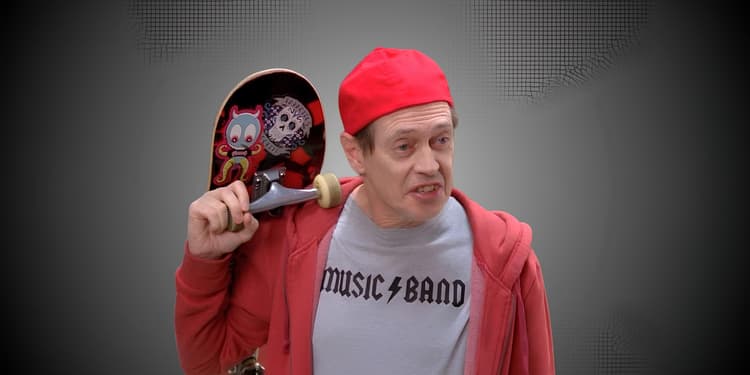
Who Is an “Ank” and What Does This Slang Term Mean
A detailed explanation of the slang term “ank,” its origin, traits, cultural meaning, ironic use by zoomers, and its role in modern youth language.
Read more

What Is Tilt: Causes, Signs, and How to Regain Emotional Control
Tilt is a state of emotional overload where rational thinking breaks down and impulsive actions take over, common in games, work, trading, and everyday life.
Read more

Phishing in 2026: Types, Risks, and How to Protect Your Data
Phishing uses AI and fake sites to steal data. Learn types, signs, protection methods, and actions if targeted to stay safe online.
Read more
%20(1).jpg&w=750&q=75)
Cyberbullying: Types, Consequences, and How to Protect Yourself
Cyberbullying is online psychological abuse with serious mental, social, and physical consequences; anyone can be a victim, and prevention requires awareness and action.
Read more

“KFC Boss”: Meaning, Origin, and Why This Slang Term Is Considered Offensive
Explanation of the slang term “KFC Boss,” its meaning, origins, usage online, why it’s offensive, and how people respond to and protect themselves from it.
Read more