

11 min. to read
Location of the Enterprise
The production complex of the Moscow Mint is located at 1 Danilovsky Val Street. The building is situated in close proximity to the Tulskaya metro station, ensuring convenient transport accessibility. The large-scale structure occupies almost an entire city block, demonstrating the architectural style of Soviet-era constructivism. There are several ways to reach the mint. From the Tulskaya metro station, one needs to walk about three hundred meters along Kholodilny Lane. An alternative option is to use surface transport to the stops Serpukhovskaya Zastava, Danilovsky Market, or directly to the Tulskaya metro station. The main entrance to the production building is located on the side of Podolskoye Highway.Historical Development of the Enterprise
The First Steps of Minting in Moscow
The tradition of coin production in the Russian capital dates back to the distant past. It is believed that coins were minted as early as the reign of Dmitry Donskoy; however, documented history begins with the era of Ivan III. In 1535, Princess Elena Glinskaya, the mother of the future Tsar Ivan the Terrible, carried out a large-scale monetary reform and established the first state mint in Moscow. Over the following two centuries, several minting facilities operated in the city, including the famous Kadashevsky Mint and the Red Chinese Mint. After the capital was moved to Saint Petersburg, the main coin production was transferred there as well, and Moscow’s enterprises gradually ceased to exist by the 1870s.Revival During Wartime
The modern history of the Moscow Mint begins on April 25, 1942, when the People’s Commissariat of Finance of the USSR issued an order to establish a Moscow branch within the structure of Goznak. The enterprise was organized on the basis of the “Artist-Metallist” artel during the Great Patriotic War, when the Leningrad Mint could not cope with the mass production of military awards. The initial task of the new facility was the production of the medals “For Courage” and “For Combat Merit.” By the end of 1942, the product range expanded — employees mastered the manufacture of the orders Red Star, Order of the Patriotic War (Second Class), Badge of Honor, as well as the medals “For Labor Valor” and “For Labor Distinction.” During the war years, the mint’s specialists significantly improved the technology for producing award items.Postwar Development and Diversification
After the end of hostilities, the enterprise did not limit itself to the production of awards and began manufacturing consumer goods. In the late 1940s, wristwatches made of precious metals and wedding rings started to be produced here. The range of products was extensive — from cigarette cases and chandeliers to buttons for military uniforms. A significant milestone was the preparation for the World Festival of Youth and Students in 1957. The mint’s workers mastered the technology of mass production of aluminum souvenir items, releasing thousands of commemorative badges for participants of the international event. In 1975, the enterprise began minting gold chervonets, and two years later a specialized workshop was organized for the production of commemorative coins for the 1980 Summer Olympic Games. It was then that specialists mastered the complex proof-quality minting technology, which ensures a mirror-like surface of coins.The Modern Production Complex
In 1968, the USSR government decided to construct a new production complex. The construction of the large-scale building began in 1974 and lasted nine years. In 1983, a workshop for minting circulating coins was launched, becoming an important milestone in the history of the enterprise. The relocation from the buildings of the Moscow Printing Factory to the new facility took five years and was completed in 1987, when the production complex reached its designed capacity. From that moment on, the Moscow Mint acquired its modern appearance and technical capabilities.Architectural Features of the Building
The exterior of the mint represents a typical example of socialist architecture with elements of constructivism. The monumental building stands out for its strict geometric forms and functional design characteristic of Soviet-era industrial structures. The scale of the building is impressive — it occupies a significant area and is visible from afar. The project was designed by architect Vsevolod Leonidovich Voskresensky. The internal layout provides for the rational placement of production workshops and auxiliary premises, ensuring an efficient technological process.Production Capacity and Specialization
Main Areas of Activity
The modern Moscow Mint is equipped with high-tech equipment and has extensive production capabilities. The central role is played by the main production workshop, where the bulk of products is minted. Of particular importance is the Gold Workshop — a specialized unit where items made of precious metals are produced: gold, silver, and platinum. The enterprise manufactures a wide range of products: circulating coins for everyday use, state awards and decorations of various classes, commemorative and jubilee medals dedicated to significant dates, investment coins made of precious metals, badges and pins for various organizations, exclusive souvenir products, and collectible tokens.International Cooperation
The Moscow Mint fulfills not only state orders of the Russian Federation but also works with foreign clients. All coins of the Republic of Abkhazia were minted at the enterprise, including the famous Abkhaz apsars, as well as a significant portion of currency for India. Such international recognition testifies to the high quality of products and compliance with global standards.Notable Coin and Medal Issues
The Olympic Series
The first series of commemorative coins was issued in 1977–1978 and was dedicated to the 1980 Summer Olympic Games in Moscow. The collection included gold coins with denominations of fifty and one hundred rubles, as well as silver coins of five and ten rubles. Among the most famous examples are the silver coin “Moscow” and the gold coin “Sport and Peace.” Today, these coins are of great value to numismatists and collectors around the world. Later, the tradition of issuing Olympic coins continued. For the 2014 Winter Olympic Games in Sochi, a special series featuring the mascots — the leopard, the polar bear, and the hare — was prepared.Investment Coins
The production of investment coins began at the enterprise in 1957. These items are intended for preserving and increasing personal financial assets. They are made of pure gold of the highest fineness, silver, or platinum, and their market value can reach tens or hundreds of thousands of rubles depending on weight and metal. A special place in the history of the mint is occupied by 1996, when kilogram gold coins were produced for the first time in Russia. This tradition continues to this day, and such unique items are in demand among serious investors and collectors.Awards of the New Russia
In October 1991, the Moscow Mint produced the first state award of the Russian Federation — the medal “Defender of Free Russia”. It was awarded to active participants in the August events of that year, which became a turning point in the country’s modern history. The first mintages of circulating coins of the Russian Federation were issued here in 1993. Since then, the enterprise has continuously produced currency for general circulation, meeting the needs of the national economy.Visiting Opportunities
The Moscow Mint is a restricted facility with limited access. Ordinary visitors cannot enter the production areas to observe the technological process for reasons of security and commercial secrecy. However, guests can view the impressive building from the outside and appreciate the scale of the industrial complex. The enterprise operates a specialized souvenir shop offering a wide range of mint products. Here one can purchase numismatic sets from various years of issue, commemorative medals for anniversary dates, rare collectible coins, investment items made of precious metals, and exclusive souvenir products. Visiting the shop allows visitors to become acquainted with examples of the craftsmen’s work and choose unique items for their collection.The Significance of the Enterprise for the Country
The Moscow Mint of Goznak occupies a crucial place in the financial system of the Russian Federation. The enterprise ensures the issuance of circulating coins for everyday monetary use, produces state awards for distinguished citizens, and creates commemorative coins that record significant events in the country’s history. A high level of technology and the qualifications of specialists allow the mint to compete on the international market. The enterprise’s products are distinguished by impeccable quality, precision of minting, and artistic value, as confirmed by numerous orders from foreign states. Today, the Moscow Mint continues to develop, mastering new production technologies and expanding the range of manufactured products. The enterprise preserves the traditions laid down during the wartime years while simultaneously keeping pace with the times by introducing innovative solutions in the field of minting and processing precious metals.
Sights Nearby
.jpg&w=750&q=75)
.jpg&w=750&q=75)


.jpg&w=750&q=75)
.jpg&w=750&q=75)
.jpg&w=750&q=75)
.jpg&w=750&q=75)
Latest Articles
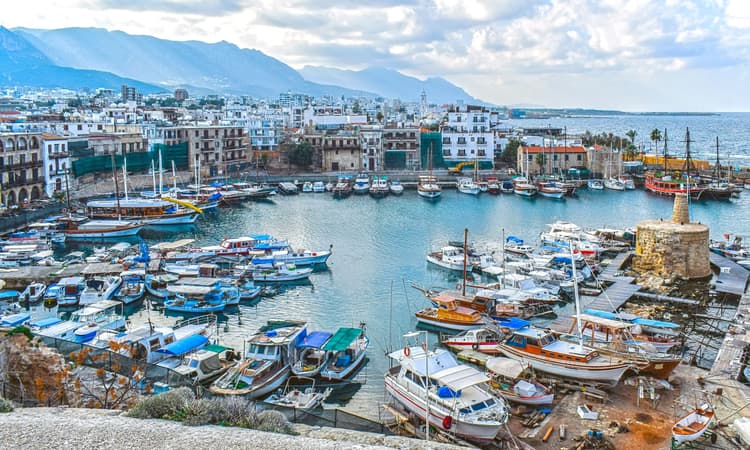
Cyprus: Europe’s Sunniest Destination – 300+ Sunny Days
Explore Cyprus, Europe’s sunniest destination with 300+ sunny days a year. Discover top resorts, best seasons to visit, and why it’s perfect for a holiday.
Read more

Belly Fat and Aging: New Scientific Discoveries
Recent research reveals how belly fat accelerates aging, boosts inflammation, and increases Alzheimer's risk—discover key health insights and prevention tips.
Read more
.jpg&w=750&q=75)
Burning Fat with Your Mind: How “Remembering” Cold Activates Brown Fat and Boosts Metabolism
Discover how recalling cold memories can trigger your brain to activate brown fat, boost metabolism, and aid weight loss—even from the comfort of a warm room.
Read more

Bridging the Education Gender Gap: Why Boys Fall Behind and How to Close It
Boys globally lag in language skills due to peer influence, stereotypes, and systemic issues—discover causes, impacts, and strategies to close the education gender gap.
Read more

How Intense Evening Workouts Disrupt Sleep, Says Monash University Study
Intense workouts within 4 h of bedtime delay sleep, cut duration, raise resting heart rate, and impair recovery, shows Monash University’s year‑long study.
Read more
Latest News
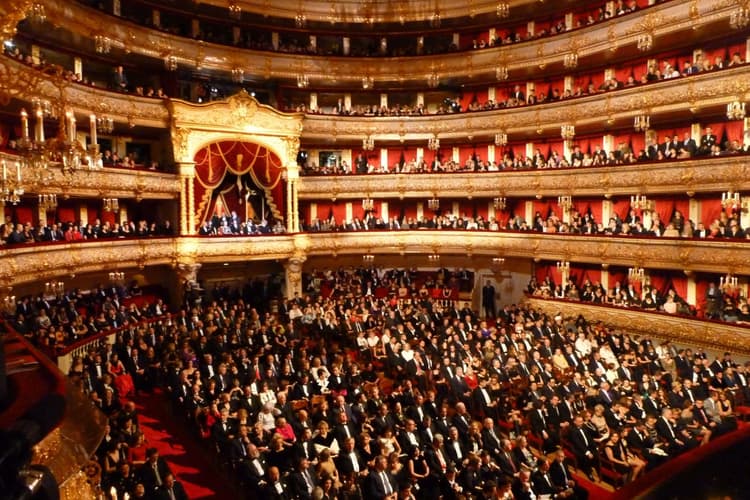
MHT vs MHAT: What’s the Difference Between Moscow’s Two Legendary Art Theatres
MHT and MHAT: what’s the difference between Moscow’s legendary art theatres? History, split of 1987, traditions, repertoires, and key distinctions explained.
Read more
.jpg&w=750&q=75)
Alexander Pushkin: Life, Exile, and Literary Legacy
A concise biography of Alexander Pushkin: childhood, exile, major works, family life, tragic death, and enduring legacy in Russian culture.
Read more
.jpg&w=750&q=75)
VDNKh Ice Rink 2025–2026: Season Opening, Prices, Schedule & Events
VDNKh ice rink opens 25 Nov 2025–1 Mar 2026. >20k m², tickets from 300₽, night sessions & events.
Read more
%20(1).jpg&w=750&q=75)
New Year 2025-2026 at VDNKh: Festive Program, Ice Shows and Skating Rink
VDNKh New Year 2025-26: huge fair, ice shows, theater, kids events & biggest rink. Dec 25-Jan 11, open daily till 23:00. Festive magic for all!
Read more
.jpg&w=750&q=75)
New Year's Moscow: A Magical Winter Fairy Tale 2025–2026
New Year's Moscow: sparkling lights, ice rinks, festive markets & fairy-tale decor on Red Square, Tverskaya, VDNH, GUM. Magical winter wonderland!
Read more