.jpg&w=640&q=75)
7 min. to read
History of the Theatre’s Foundation
The beginning of the Moscow Art Theatre is considered to be the historic meeting of Konstantin Stanislavsky and Vladimir Nemirovich-Danchenko at the Slavyansky Bazaar restaurant on June 19, 1897. The theatre was officially founded in 1898 and introduced audiences to the works of Anton Chekhov, Mikhail Bulgakov, Maxim Gorky, and Valentin Rasputin. The theatre was named after Maxim Gorky by its founders in 1932. In 1987, an important event took place — the USSR Moscow Art Theatre split into two independent companies. Thus emerged the Moscow Art Academic Theatre named after Gorky, headed by Tatyana Doronina, and the Moscow Art Theatre named after Chekhov under the leadership of Oleg Efremov. The Gorky Moscow Art Theatre became the legal successor of the historic MHAT.Modern Development under the Leadership of Eduard Boyakov
In 2018, Eduard Boyakov became the artistic director of the theatre, completely reshaping the agenda of the MHAT and turning it into one of the main newsmakers of the Russian theatrical scene. The theatre began actively collaborating with key figures of contemporary culture, including writers Yevgeny Vodolazkin and Svyatoslav Rybas, choreographer Anton Adasinsky, and directors Andrei Konchalovsky and Sergey Puskepalis. Renowned actors were invited to the company: Alisa Grebenshchikova, Alika Smekhova, Yulia Vysotskaya, Gosha Kutsenko, Alexander Yatsko, Leonid Yarmolnik. For the first time in forty years, productions based on plays by contemporary playwrights appeared in the repertoire, and young set designers began to participate in staging performances.The “Open Stages” Project
In 2020, the innovative “Open Stages” project was launched, transforming almost the entire theatre area into a creative space. In addition to the three main stages, eleven more venues appeared, hosting readings, rehearsals, lectures, and other cultural events. The theatre’s unique infrastructure allows for a wide variety of creative experiments.Architecture of the Building on Tverskoy Boulevard
The modern building of the Gorky Moscow Art Theatre was constructed in 1972–1973 by architects Vladimir Kubasov, Alexey Morgulis, and Vladimir Ulyashov. This monumental structure with a dark façade clad in brownish-reddish tuff became an architectural symbol of its era.Façade Features
The main façade of the theatre is divided into long horizontal bands that imitate a theatrical curtain carved in stone, falling in folds downward. A continuous white band of balconies and metal brackets supporting lanterns and bas-reliefs depicting four muses emphasize the main entrance and add rhythm to the composition. Some decorative elements and color solutions were borrowed from the old MHAT building designed by Fyodor Shekhtel. The overall stylistic approach of the façade is close to St. Petersburg and Scandinavian Art Nouveau.Theatre Interior
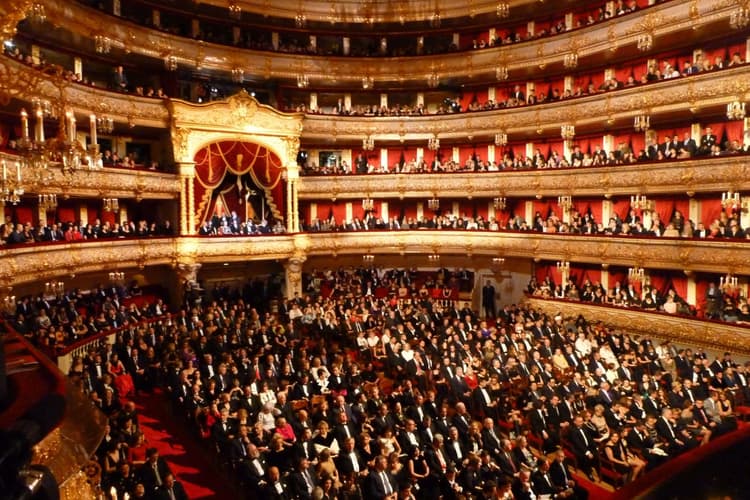
The interior is executed using natural materials — dark wood and stone. The sculptural treatment of walls, supporting columns, railings, and ceiling lights, combined with a muted color palette, creates a special atmosphere. The use of flowing spaces, where different types of lighting accentuate transitions from one room to another, conceals the asymmetry of the internal layout. The architects created a vivid artistic concept in which a precise sense of stylistic unity of form, plasticity, and color was achieved. Today, the theatre organically combines a festive atmosphere with brutal architecture.Theatre Repertoire
The playbill of the Gorky Moscow Art Theatre features works from different eras and authors. Here one can see productions based on plays by the founders of MHAT dramaturgy — Maxim Gorky, Anton Chekhov, Mikhail Bulgakov; Russian and foreign classics — Alexander Ostrovsky, Ivan Turgenev, William Shakespeare, Bernard Shaw; as well as Soviet and contemporary writers — Valentin Rasputin, Viktor Rozov, Yevgeny Schwartz. The legendary “The Blue Bird”, staged in 1908 by Konstantin Stanislavsky, and “Three Sisters” in the 1940 production by Vladimir Nemirovich-Danchenko are still carefully preserved in the repertoire. In recent years, the following performances have enjoyed constant success with audiences: “The Secret of the Regan Hotel Door,” “Her Friends,” “The Invisible Friend,” “The Old Actress for the Role of Dostoevsky’s Wife,” “The Precipice,” “The White Guard,” “One Hundred Steps from the Holiday,” “Dear Pamela.”Theatre Company
The company includes both renowned actors — honored and people’s artists Yuri Gorobets, Aristarkh Livanov, Margarita Yuryeva — and a younger generation of performers. Works of Russian and foreign classical literature with deep, serious subtext are brought to life on stage by a professional team.The Stanislavsky System and the Theatre’s Global Significance
The MHAT has always been and remains a space for rethinking theatre as a phenomenon. It was here that the famous Stanislavsky system was born, which today remains the foundation of actor training in many countries around the world. The discoveries of the Art Theatre eventually became classics, and its methods turned into tradition. The theatre’s name became synonymous with Russian national theatre. The theatre has always been a cradle for studios and independent companies, a platform for experimentation and new technologies. In 1901, the word “public” was removed from the name, but the orientation toward a democratic audience remained one of its core principles.MHAT Today
Today, the Gorky Moscow Art Theatre is a modern theatre that brings together people of different generations, professions, faiths, and nationalities who recognize their belonging to Russian culture. Reflecting on contemporary theatrical phenomena, the MHAT has been and remains a Russian theatre with a century-old tradition. Eduard Boyakov believes that the theatre must continue the traditions of its founders, maintaining its status as one of the most significant theatres in the world while remaining a relevant platform for creative exploration.Practical Information for Visitors
Address: Moscow, Tverskoy Boulevard, building 22 (Pushkinskaya metro station) Box Office Hours: daily from 12:00 to 15:00 and from 16:00 to 19:00 Phones: box office +7 (495) 697-87-73, information service +7 (495) 203-62-22 Official website: art-theatre.ru Email: [email protected] The Moscow Art Academic Theatre named after Maxim Gorky (MHAT) continues to write its history, remaining a key center of theatrical culture in Russia and a place where classical traditions are organically combined with contemporary artistic exploration.
Sights Nearby
.jpg&w=750&q=75)


.jpeg&w=750&q=75)
.jpg&w=750&q=75)

Latest Articles
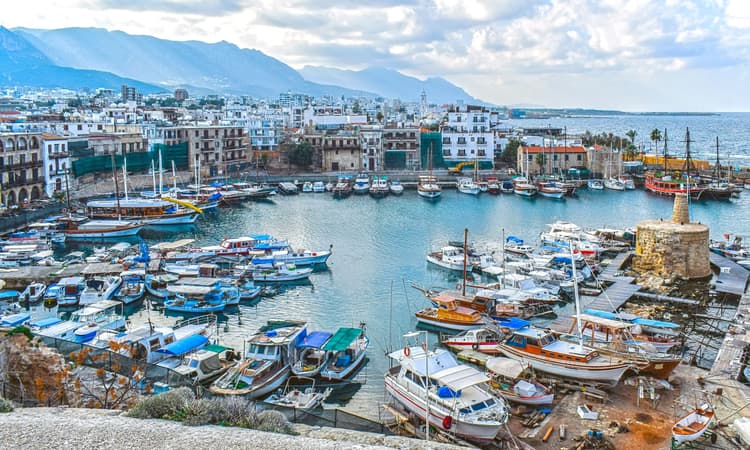
Cyprus: Europe’s Sunniest Destination – 300+ Sunny Days
Explore Cyprus, Europe’s sunniest destination with 300+ sunny days a year. Discover top resorts, best seasons to visit, and why it’s perfect for a holiday.
Read more

Belly Fat and Aging: New Scientific Discoveries
Recent research reveals how belly fat accelerates aging, boosts inflammation, and increases Alzheimer's risk—discover key health insights and prevention tips.
Read more
.jpg&w=750&q=75)
Burning Fat with Your Mind: How “Remembering” Cold Activates Brown Fat and Boosts Metabolism
Discover how recalling cold memories can trigger your brain to activate brown fat, boost metabolism, and aid weight loss—even from the comfort of a warm room.
Read more
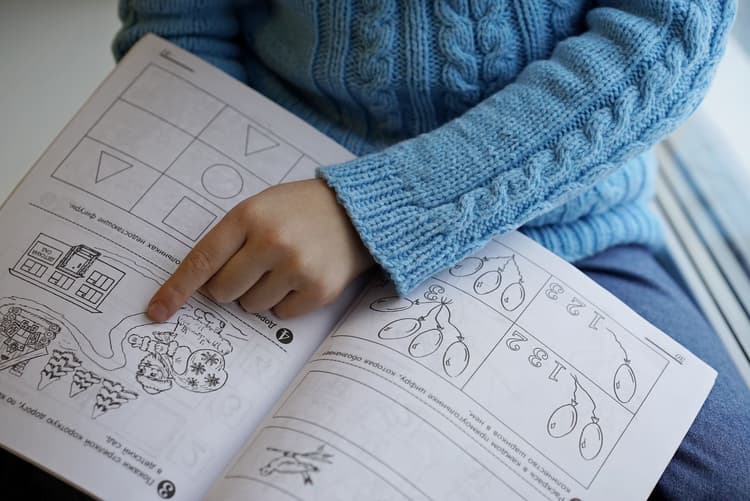
Bridging the Education Gender Gap: Why Boys Fall Behind and How to Close It
Boys globally lag in language skills due to peer influence, stereotypes, and systemic issues—discover causes, impacts, and strategies to close the education gender gap.
Read more
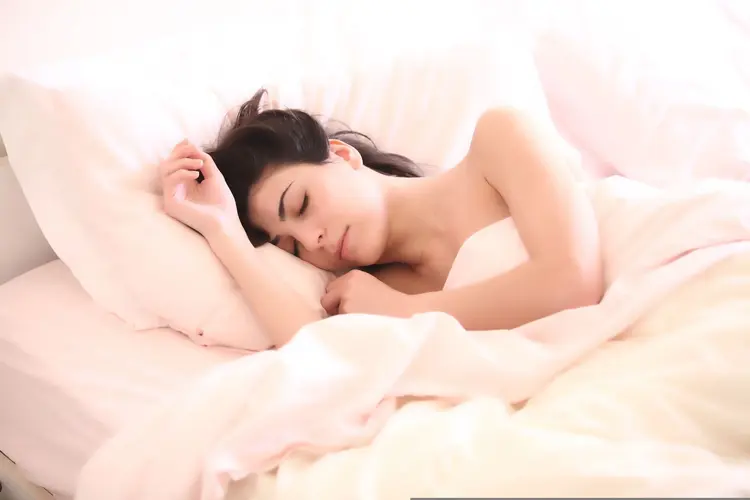
How Intense Evening Workouts Disrupt Sleep, Says Monash University Study
Intense workouts within 4 h of bedtime delay sleep, cut duration, raise resting heart rate, and impair recovery, shows Monash University’s year‑long study.
Read more
Latest News
MHT vs MHAT: What’s the Difference Between Moscow’s Two Legendary Art Theatres
MHT and MHAT: what’s the difference between Moscow’s legendary art theatres? History, split of 1987, traditions, repertoires, and key distinctions explained.
Read more
.jpg&w=750&q=75)
Alexander Pushkin: Life, Exile, and Literary Legacy
A concise biography of Alexander Pushkin: childhood, exile, major works, family life, tragic death, and enduring legacy in Russian culture.
Read more
.jpg&w=750&q=75)
VDNKh Ice Rink 2025–2026: Season Opening, Prices, Schedule & Events
VDNKh ice rink opens 25 Nov 2025–1 Mar 2026. >20k m², tickets from 300₽, night sessions & events.
Read more
%20(1).jpg&w=750&q=75)
New Year 2025-2026 at VDNKh: Festive Program, Ice Shows and Skating Rink
VDNKh New Year 2025-26: huge fair, ice shows, theater, kids events & biggest rink. Dec 25-Jan 11, open daily till 23:00. Festive magic for all!
Read more
.jpg&w=750&q=75)
New Year's Moscow: A Magical Winter Fairy Tale 2025–2026
New Year's Moscow: sparkling lights, ice rinks, festive markets & fairy-tale decor on Red Square, Tverskaya, VDNH, GUM. Magical winter wonderland!
Read more