

14 min. to read
History of the Museum's Creation: From the Kunstkamera to the Modern Complex
The Petrine Era and the First Collections
The origins of the museum's collection date back to the early 18th century, when Peter I founded the Kunstkamera in 1714. The inquisitive emperor showed particular interest in the fossilized remains of prehistoric animals, bones, and teeth of Ice Age mammals. These rare finds laid the foundation for the paleontological collection, which later became the basis for one of the world's greatest museums.Development of the Collection in the 19th Century
The collected exhibits were initially stored in the Mineral Cabinet of the Academy of Sciences. By the beginning of the 19th century, the collection numbered more than 20 thousand items, which required its reorganization. In 1836, the cabinet was transformed into the Mineralogical Museum, but access for the general public remained limited for a long time. The systematization and scientific processing of the collection began at the end of the 19th century under the direction of director Fyodor Schmidt, a renowned geologist and paleontologist. Under him, the institution received the name Geological Museum. The next director, Feodosiy Chernyshev, divided the collection into geological and mineralogical departments, with all paleontological materials included in the geological direction.The Soviet Period and the Move to Moscow
In 1925, on the 200th anniversary of the Russian Academy of Sciences, a large-scale reform of scientific institutions took place. The museum was divided into two independent directions: the Geological Museum of the USSR Academy of Sciences and the Mineralogical Museum of the USSR Academy of Sciences. The paleontological collection remained part of the former, including the famous Osteological Department and the North Dvina Gallery with skeletons of Permian vertebrates discovered by paleontologist Vladimir Amalitsky. In 1937, the museum opened in Moscow on the territory of the Neskuchnoye estate, housed in a historic riding arena built by Count Fyodor Orlov in the early 19th century. The opening was timed to coincide with the XVII session of the International Geological Congress. Initially, the exhibition occupied only 700 square meters, but it was constantly replenished thanks to the active work of the staff of the Paleontological Institute.Yuri Orlov and the Construction of the New Building
In 1945, the institute and museum were headed by the outstanding zoologist and paleontologist Yuri Alexandrovich Orlov. He understood that the growing collection required more spacious premises. By 1954, the number of exhibits had increased so much that the museum had to be temporarily closed to visitors due to a lack of exhibition space. For more than ten years, Orlov sought to resolve this problem, sending appeals to the government of the USSR and the leadership of the Academy of Sciences. In 1965, his efforts were successful—two million rubles were allocated for the construction of a new museum complex. Unfortunately, the scientist did not live to see the opening of the museum, passing away in 1966. In memory of his invaluable contribution, the museum was named after Yuri Alexandrovich Orlov.Architectural Appearance: A Medieval Fortress in the Neobrutalist Style
Concept and Design
The building's design was developed in 1968 by a team of architects from the Head Design and Research Institute of the USSR Academy of Sciences. The work was led by Yuri Platonov and Leonid Yakovenko. The architects chose the neobrutalist style, which emerged in the 1950s in Great Britain and is characterized by massive concrete structures, unusual forms, and minimalist decor.Location and Construction Features
A picturesque location was chosen for the construction in the southwest of Moscow, on the border with Bitsevsky Forest—one of the largest natural areas in the capital. Initially, it was planned to create an entire paleontological complex with a park and the relocation of the zoo, but due to lack of funding, the project was scaled down. Construction began only in 1972 and continued until the end of the 1980s. The building opened to visitors in 1987. The total area of the structure was almost 10 thousand square meters: half was occupied by the museum, and the other part housed the Paleontological Institute of the Academy of Sciences.Architectural Solutions
The red-brick museum building resembles an ancient fortress with a central inner courtyard, around which four exhibition zones are located with adjoining towers. In the inner courtyard, there is an amphitheater modeled after the Greek style, decorated with sculptures of dinosaurs, mammoths, and other extinct animals. The facades are decorated with grilles featuring abstract patterns and images of ancient lizards. The building's architecture creates a special atmosphere, immersing visitors in the mysterious world of prehistoric times. For their outstanding work on the project, the architects, sculptors, and artists were awarded the State Prize of Russia.Artistic Decoration of the Halls
Monumental Panels
The museum's interiors are adorned with unique works of art created by leading Moscow animalist artists. The largest decorative element is the ceramic panel "Tree of Life" with an area of 500 square meters by sculptor-animalist Alexander Belashov. The composition is located in a semicircular niche of one of the towers and depicts the development of organic life on Earth from the first living organisms in seawater to the emergence of humans.Copper Compositions and Paintings
In the Late Paleozoic hall, the central decorative element is a multi-tiered copper chandelier by sculptor Peter Panchenko, decorated with images of the most ancient vertebrate animals. The Mesozoic and Cenozoic halls are decorated with paintings by paleontologist and animalist Konstantin Flyorov depicting saurolophs, bison, and mammoths. The large-scale panel "Late Cretaceous Landscape of the Southern Gobi" was created by illustrators May Miturich-Khlebnikov and Viktor Duvidov. White stone, copper, and bronze were used for wall finishing, creating a rich and memorable space.Museum Exhibition: A Journey Through Millions of Years
First Hall: Introduction to Paleontology
The introductory hall acquaints visitors with paleontology as a science, its history, and research methods. Portraits of outstanding scientists are presented here, along with the results of famous expeditions. Under the ceiling of the two-story hall hovers a cast of the skeleton of a plesiosaur—a marine reptile from the Jurassic period. Particular attention is drawn to the Trofimov Mammoth skeleton, found in 1842 in Siberia. The remains of the animal, which weighed more than 5 tons in life, were discovered by industrialist Trofimov and donated to the Moscow Society of Naturalists.Second Hall: Precambrian and Early Paleozoic
This hall is dedicated to the earliest stages of life development on the planet—from an oxygen-free atmosphere to the appearance of the first terrestrial organisms. At the entrance, visitors are greeted by the skeleton of an indricotherium—a giant hornless rhinoceros, one of the largest land mammals in Earth's history, weighing up to 20 tons. The exhibition features the most ancient fossils: slabs with traces of trilobite activity, the sea lily Hypermorphocrinus with long defensive spines, and the museum's only living exhibit—a cyanobacterial mat, a colony of microorganisms more than 3.5 billion years old.Third Hall: Geology of the Moscow Region
The hall demonstrates how the geology and paleontology of Moscow and adjacent areas changed over millions of years. Here one can see fossilized mollusks from ancient seas that flooded the region, a fragment of the skull of a labyrinthodont—an amphibian resembling a crocodile that lived in the territory of the modern Volga region about 240 million years ago. The hall is decorated with a ceramic panel by Alexander Belashov depicting a partially swampy Carboniferous forest. Interactive maps show how the region's appearance changed in various geological periods, and some exhibits can be touched by hand.Fourth Hall: Late Paleozoic
The exhibition tells about the evolution of vertebrate animals at the end of the Paleozoic and the beginning of the Mesozoic. The main attraction is the world-famous North Dvina Gallery—a collection of skulls and skeletons of Permian vertebrates collected by Professor Vladimir Amalitsky as a result of many years of excavations at the beginning of the 20th century. Among the exhibits stands out a meter-long skull of a mastodonsaurus—an aggressive piscivorous predator discovered in the 1970s in southern Bashkiria, and a slab with several skeletons of plated crossopterygian fish from Latvia.Fifth Hall: The Age of Dinosaurs
The most spectacular two-level hall is dedicated to the Mesozoic era—the time of the flourishing of dinosaurs. More than 30 skeletons of ancient lizards are collected here, including a 10-meter tarbosaurus, a 26-meter diplodocus, an 11-meter saurolophus, and other giants. Of particular value is the cast of the diplodocus skeleton, gifted in 1910 by entrepreneur Andrew Carnegie to Russian Emperor Nicholas II. The hall also displays a fossilized clutch of sauropod dinosaur eggs about 120 million years old, found in the Gobi Desert. The wall is adorned with the grandiose panel "Late Cretaceous Landscape of the Southern Gobi," which took four months to create and one and a half thousand eggs to prepare tempera paints.Sixth Hall: Cenozoic Mammals
The final hall covers the period from the extinction of dinosaurs 65 million years ago to the present day. The exhibition includes skeletons of ancestors of modern animals: a giant rhinoceros almost 5 meters tall, a steppe mammoth, a big-horned deer with an antler span of up to 3.5 meters. A cast of the mummified body of the mammoth calf Dima, discovered in 1977 in the Magadan region, is presented. A separate stand is dedicated to human evolution and primitive bison. Here one can see the remains of the unique Borisyakia—a 4-meter herbivorous animal that simultaneously resembled a horse and a bear.Scientific and Educational Activities
Paleontological Club
For more than 60 years, the Paleontological Club for schoolchildren has been operating at the museum. Young researchers study the theoretical foundations of paleontology, participate in real excavations, work in the preparatory laboratory, and assemble full-fledged exhibits under the guidance of experienced scientific staff.Educational Programs
The museum regularly holds popular science lectures, competitions for schoolchildren, thematic master classes, and quests. Visitors can use a free mobile audio guide by downloading the app and scanning QR codes near the exhibits. Every year on May 26, "Paleontological Museum Day" is celebrated with special events: exhibitions, excursions, interactive programs, and meetings with scientists. The museum is an important scientific and educational center where visitors of any age can expand their knowledge of the natural history of the Earth.Practical Information for Visitors
Opening Hours and Ticket Prices
The museum is open five days a week, with Mondays and Tuesdays as days off. From October to May, the halls are open from 10:00 to 18:00, with the ticket office closing at 17:15. In the summer period from June to September, the museum operates from 11:00 to 18:00. During New Year holidays, days off are canceled. The entrance ticket costs 400 rubles for adults, a discounted ticket for pensioners, school and university students, and large families—200 rubles. Children under 6 years old and other privileged categories visit the museum for free. Non-commercial photo and video shooting is allowed without additional charge.How to Get There
The museum is located at: Moscow, Profsoyuznaya Street, 123. The nearest metro stations are "Tyoply Stan" and "Konkovo". From the "Tyoply Stan" station, it is about 10-15 minutes on foot along the odd side of Profsoyuznaya Street toward the center. Near the museum is the "Paleontological Institute" bus stop, served by buses and trolleybuses of various routes. Parking is provided for motorists, but the number of spaces is limited.Uniqueness of the Collection
The Yu.A. Orlov Paleontological Museum in Moscow is among the largest natural history museums in the world. Its collection numbers more than 5000 exhibits, many of which are unique and have no analogs. The exhibition reflects the results of many years of expeditionary research conducted by institute staff in Russia, the former USSR, China, Mongolia, and other countries. Each exhibit has scientific value and helps reconstruct the picture of the development of life on our planet. The museum is not only a popular tourist attraction in Moscow but also an important scientific institution of the Paleontological Institute of the Russian Academy of Sciences, where research is conducted and specialists in paleontology are trained. Visiting this amazing place will become an unforgettable journey into the Earth's past for adults and children.
Sights Nearby


.jpg&w=750&q=75)
Latest Articles

Cyprus: Europe’s Sunniest Destination – 300+ Sunny Days
Explore Cyprus, Europe’s sunniest destination with 300+ sunny days a year. Discover top resorts, best seasons to visit, and why it’s perfect for a holiday.
Read more

Belly Fat and Aging: New Scientific Discoveries
Recent research reveals how belly fat accelerates aging, boosts inflammation, and increases Alzheimer's risk—discover key health insights and prevention tips.
Read more
.jpg&w=750&q=75)
Burning Fat with Your Mind: How “Remembering” Cold Activates Brown Fat and Boosts Metabolism
Discover how recalling cold memories can trigger your brain to activate brown fat, boost metabolism, and aid weight loss—even from the comfort of a warm room.
Read more

Bridging the Education Gender Gap: Why Boys Fall Behind and How to Close It
Boys globally lag in language skills due to peer influence, stereotypes, and systemic issues—discover causes, impacts, and strategies to close the education gender gap.
Read more

How Intense Evening Workouts Disrupt Sleep, Says Monash University Study
Intense workouts within 4 h of bedtime delay sleep, cut duration, raise resting heart rate, and impair recovery, shows Monash University’s year‑long study.
Read more
Latest News
.jpg&w=750&q=75)
Alexander Pushkin: Life, Exile, and Literary Legacy
A concise biography of Alexander Pushkin: childhood, exile, major works, family life, tragic death, and enduring legacy in Russian culture.
Read more
.jpg&w=750&q=75)
VDNKh Ice Rink 2025–2026: Season Opening, Prices, Schedule & Events
VDNKh ice rink opens 25 Nov 2025–1 Mar 2026. >20k m², tickets from 300₽, night sessions & events.
Read more
%20(1).jpg&w=750&q=75)
New Year 2025-2026 at VDNKh: Festive Program, Ice Shows and Skating Rink
VDNKh New Year 2025-26: huge fair, ice shows, theater, kids events & biggest rink. Dec 25-Jan 11, open daily till 23:00. Festive magic for all!
Read more
.jpg&w=750&q=75)
New Year's Moscow: A Magical Winter Fairy Tale 2025–2026
New Year's Moscow: sparkling lights, ice rinks, festive markets & fairy-tale decor on Red Square, Tverskaya, VDNH, GUM. Magical winter wonderland!
Read more
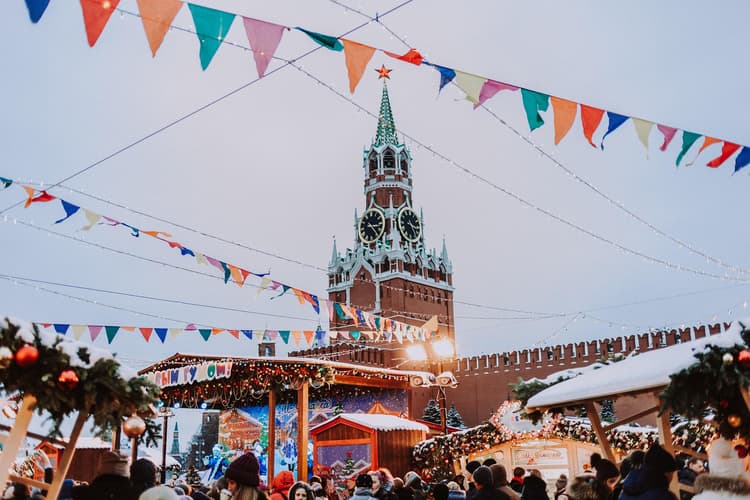
New Year’s Eve 2026 on Red Square: Access, Tickets, and Festivities
New Year’s Eve on Red Square: ticketed entry only, festive rink, market, events, decorations, and free city transport all night.
Read more