

12 min. to read
Coordinates: 55.713891, 37.657418
Opening hours: daily, guided tours are held on Sundays from 12:00
History of the founding of Simonov Monastery
Foundation of the cloister in the 14th century
The history of Simonov Monastery began in 1370 with the erection of the Church of the Nativity of the Theotokos. The thirty-year-old nephew of Sergius of Radonezh, the future venerable Feodor, came to these lands to build a hermitage. According to legend, the land for the future cloister was donated by the boyar Stepan Khovrin, who took monastic vows under the name Simon — hence the name, which has survived to this day as the Simonov settlement. Other monks and pilgrims joined Feodor, who together built a wooden Church of the Nativity of the Theotokos and cells. However, the nephew of Radonezh sought a more secluded place and went further, to a height where he founded the monastery. This area became known as New Simonov, while the former location came to be called Old Simonov, with the Church of the Nativity of the Theotokos at its center, surrounded by the cells of silent-order monks.The heyday of monastic life
The main church of New Simonov — the Assumption Cathedral — was completed in the 15th century after the death of the monastery's founder. In the 16th century the famous theologian Maximus the Greek worked here. In 1591 the monastery fulfilled its purpose as a fortress by successfully repelling a raid by the Crimean Tatars led by Kazy-Girey. In the 17th century the walls and towers were rebuilt, and the Moscow architect Osip Startsev created a magnificent refectory adjoining the Church of the Tikhvin Icon of the Mother of God.Trials and destructions
When monastic life had only just been established, in 1771 Catherine II carried out secularization reforms, confiscating monastic lands. Simonov Monastery was abolished, and during a plague epidemic it was turned into a quarantine for the infected. However, following the pattern of Russian history to build, destroy and restore, restoration of the cloister began in 1795. A new trial awaited the monastery in 1812: French troops looted the cloister, turned the church into stables, and occupied the cells themselves. In the 1820s another restoration began funded by the treasury and private donors. The architect Konstantin Thon, creator of the first Cathedral of Christ the Saviour, erected in Old Simonov a bell tower 100 meters high — the tallest in Moscow, surpassing the famous Ivan the Great. Two bell towers were to ring out in response to each other, spreading enchanting melodies over the capital.The tragedy of the Soviet period
After the October Revolution the bell ringing was banned, and a museum of military-fortress defense was organized in the Tikhvin Church. In 1928 the site was chosen for the construction of a huge Palace of Culture, for which five of the six monastery churches were demolished, all walls except the southern one were destroyed, two of the five towers and the bell tower were removed. During community workdays the workers destroyed the tombstones of the old necropolis. Only the poet Dmitry Venevitinov and the writer Sergey Aksakov were honored with reburial at the Novodevichy Cemetery. Other representatives of noble families — the Naryshkins, Shakhovskys, Muravyovs, Tatischevs — remained lying under the new Palace of Culture and the surrounding square. The surviving monastery buildings were turned into housing for workers, and the Church of the Nativity of the Theotokos was converted into a compressor station for the Dynamo factory.Interesting facts about Simonov Monastery
Pond of Poor Liza
Near the Church of the Nativity of the Theotokos in the 14th century Sergius of Radonezh dug a small pond, called the Holy Pond until the end of the 18th century. The poet Nikolai Karamzin, seeing this place, invented the story of Poor Liza, who fell in love with the nobleman Erast, who abandoned her for a wealthy bride. Liza threw herself into the pond where they once strolled together. The tale became incredibly popular, and Muscovites renamed the water body Liza's Pond. Young women came here to mourn unrequited love; some contemplated repeating the heroine's fate. It is said that someone left a caustic inscription on an oak: "Here Erast's bride threw herself into the pond. Go drown yourselves, girls, there is plenty of room in the ponds!" After the revolution the pond was filled in as too filthy, and the Dynamo factory building was erected over it.Heroes of the Battle of Kulikovo
Before the Battle of Kulikovo Dmitry Donskoy went to Sergius of Radonezh at the Trinity Monastery for a blessing. Sergius foretold victory to the prince and gave him two monks — the former warriors Peresvet and Oslyabya — to aid him. The story is known of the duel before the start of the battle between Peresvet and the Mongol hero Chelubey, who pierced each other with lances to death. After the victory Dmitry Donskoy ordered the fallen monks to be buried in the beloved church of Old Simonov — the Church of the Nativity of the Theotokos, dedicated to the feast on which the victory at Kulikovo Field occurred. There is a version that the prince created a place of veneration for future Moscow rulers so they would be inspired by the feat of the monk-warriors. Around Peresvet and Oslyabya about 40 of the prince's nearest boyars were buried. Dmitry Donskoy brought to the church an icon with which Sergius blessed him and the warrior-monks for battle. This three-paneled icon from the Simonov Monastery treasury is now kept in the Tretyakov Gallery.What to see at Simonov Monastery
Southern wall and towers
Only the southern wall of Simonov Monastery has survived — the rest were blown up in the 1930s. A walk along it opens beautiful views from the hill over Moscow. Of the five towers three have survived: the Dulo with a sixteen-sided base, the smallest five-sided Kuznechnaya, and the nineteen-sided Solevaya. The towers are clearly visible from the modern business center "Simonov Plaza."Tikhvin Church
The only surviving monastery church — the Tikhvin Church — is open for services. Services with sign-language interpretation for deaf and hard-of-hearing parishioners are held here. The refectory at the church, built in 1685 by the famous architect Osip Startsev, is an outstanding example of Moscow architecture.Refectory with pies
In Old Simonov there is a refectory where fresh tasty pies are made. Visitors can have coffee, warm up and look at old photographs on the walls that captured the monastery before the devastation of the 1930s, during and after restoration.Palace of Culture
Next to the monastery ruins stands a monument to Constructivism — the Palace of Culture, built by the Vesnin brothers in the 1930s. The building is indeed beautiful and full of history, although its construction required the destruction of part of the cloister and the elimination of the old cemetery.Sacred relics of Simonov Monastery
Church of the Nativity of the Theotokos (Old Simonov)
- An ancient Tikhvin icon in a heavy riza, returned here in the 1990s and considered miraculous. Small rings hang before the icon — votive offerings from people delivered from trouble
- The relics of the venerables Peresvet and Oslyabya with a marble monument to these monks on the church grounds
- An icon of the Great Martyr Panteleimon with a particle of relics
Church of the Tikhvin Icon of the Mother of God
- The Tikhvin Icon of the Mother of God — a copy (list) of the miraculous image
- The icon of the Mother of God "Softening of Evil Hearts," adorned with precious rings and pendants — votive offerings given in thanks for healing and answered prayers
Simonov Monastery in culture and the arts
The place where the pond once stood (now the Dynamo factory building) inspired Karamzin to write the tale "Poor Liza", which became a classic of Russian literature. The interiors of the Palace of Culture were used to shoot scenes for the cult film "Charodei" (The Magicians). Premises of the Palace of Culture also appeared in Valery Todorovsky's film "The Thaw." After the war, students who would later become famous artists studied at the Theater Studio at the Palace of Culture: Vasily Lanovoy, Vera Vasilyeva and other actors. The Palace was visited by the head of Cuba, Fidel Castro.How to get to Simonov Monastery
Metro: "Aвtozavodskaya" station of the Zamoskvoretskaya line or the MCC "Avtozavodskaya". From the station it is about a 15-minute walk north along Vostochnaya Street. The monastery towers are visible from the metro, so it is not difficult to find your way.Conclusion
Simonov Monastery is a unique place where centuries of Russian history are intertwined — from the heroic events of the Battle of Kulikovo to the tragedy of Soviet-era destructions. Despite the losses, the surviving towers and churches continue to remind us of the greatness of the ancient cloister, which served as a bulwark of Moscow for centuries.
Sights Nearby


.jpg&w=750&q=75)

%20(1).jpg&w=750&q=75)


.jpg&w=750&q=75)


Latest Articles
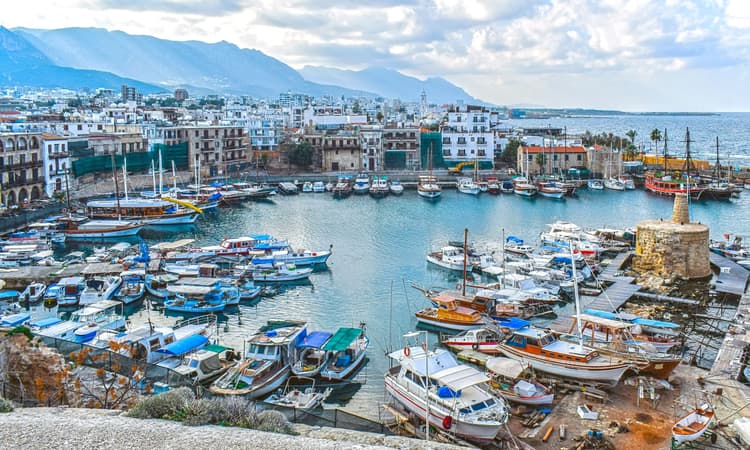
Cyprus: Europe’s Sunniest Destination – 300+ Sunny Days
Explore Cyprus, Europe’s sunniest destination with 300+ sunny days a year. Discover top resorts, best seasons to visit, and why it’s perfect for a holiday.
Read more

Belly Fat and Aging: New Scientific Discoveries
Recent research reveals how belly fat accelerates aging, boosts inflammation, and increases Alzheimer's risk—discover key health insights and prevention tips.
Read more
.jpg&w=750&q=75)
Burning Fat with Your Mind: How “Remembering” Cold Activates Brown Fat and Boosts Metabolism
Discover how recalling cold memories can trigger your brain to activate brown fat, boost metabolism, and aid weight loss—even from the comfort of a warm room.
Read more
Bridging the Education Gender Gap: Why Boys Fall Behind and How to Close It
Boys globally lag in language skills due to peer influence, stereotypes, and systemic issues—discover causes, impacts, and strategies to close the education gender gap.
Read more

How Intense Evening Workouts Disrupt Sleep, Says Monash University Study
Intense workouts within 4 h of bedtime delay sleep, cut duration, raise resting heart rate, and impair recovery, shows Monash University’s year‑long study.
Read more
Latest News
.jpg&w=750&q=75)
VDNKh Ice Rink 2025–2026: Season Opening, Prices, Schedule & Events
VDNKh ice rink opens 25 Nov 2025–1 Mar 2026. >20k m², tickets from 300₽, night sessions & events.
Read more
%20(1).jpg&w=750&q=75)
New Year 2025-2026 at VDNKh: Festive Program, Ice Shows and Skating Rink
VDNKh New Year 2025-26: huge fair, ice shows, theater, kids events & biggest rink. Dec 25-Jan 11, open daily till 23:00. Festive magic for all!
Read more
.jpg&w=750&q=75)
New Year's Moscow: A Magical Winter Fairy Tale 2025–2026
New Year's Moscow: sparkling lights, ice rinks, festive markets & fairy-tale decor on Red Square, Tverskaya, VDNH, GUM. Magical winter wonderland!
Read more
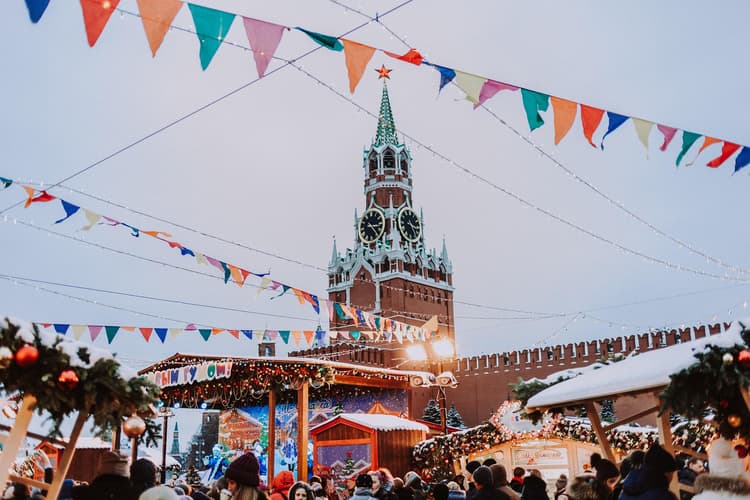
New Year’s Eve 2026 on Red Square: Access, Tickets, and Festivities
New Year’s Eve on Red Square: ticketed entry only, festive rink, market, events, decorations, and free city transport all night.
Read more
.jpg&w=750&q=75)
GUM Skating Rink on Red Square Opens 20th Anniversary Season
GUM Skating Rink on Red Square opened Dec 1 for its 20th season (until Mar 1, 2026). Dymkovo toy design, free weekdays till 14:30, stars at opening.
Read more