.jpg&w=640&q=75)
December 24,6 min. to read
Visual characteristics of the Russian tricolor
The Russian flag is easily recognizable thanks to its concise composition. The three horizontal stripes are equal in width and occupy the entire space of the cloth without any additional elements. The modern state flag contains no coats of arms, inscriptions, or other images—only three colors arranged in a strict sequence from top to bottom: white, blue, red. Interestingly, the specific shades of blue and red are not legislatively regulated. However, since 1999, a state standard has been in effect according to which the colors must correspond to the atlas of the All-Union Center for Assortment and Fashion of the Light Industry or the Pantone system. This helps avoid the use of random shades when manufacturing official flags.History of the white-blue-red flag
The Russian tricolor has a rich history spanning more than three centuries. The first mention of the white-blue-red flag dates back to 1668, when these colors were used for the warship “Oryol,” built during the reign of Tsar Alexei Mikhailovich. At that time, red, white, and blue fabric was purchased for making flags. In 1693, Peter I raised the tricolor during a voyage in the White Sea. This flag, known as the “flag of the Tsar of Moscow,” had the familiar arrangement of stripes, but featured a golden double-headed eagle in the center. In 1705, the emperor issued a decree on the use of the white-blue-red flag on merchant vessels, and the tricolor became a symbol of the Russian merchant fleet.Transformations of the state symbol
Throughout history, the appearance of the country’s main symbol has changed repeatedly. In 1858, Emperor Alexander II approved the black-yellow-white flag, which reflected dynastic traditions. However, in 1883, Alexander III restored the white-blue-red cloth for use on ceremonial occasions. After the 1917 Revolution, the tricolor was replaced by a red banner. Initially, the flag of the RSFSR was a red cloth with a golden inscription “RSFSR.” Later, in 1924, the flag of the USSR was adopted, featuring a hammer and sickle and a five-pointed star on a red background.The return of the historical flag
On August 22, 1991, the Supreme Soviet of the RSFSR resolved to consider the white-blue-red flag the official national symbol of the Russian Federation. On the evening of December 25 of the same year, the tricolor was already flying over the Kremlin, marking a return to historical traditions. Initially, the revived flag featured stripes of white, light blue, and scarlet. In December 1993, President Boris Yeltsin signed a decree in which the colors were specified in their modern naming: white, blue, red. The previous version was permitted for use until January 1, 1995. In 2000, a federal constitutional law “On the State Flag of the Russian Federation” was adopted, which finally закрепило the description and rules for the use of the tricolor.Symbolism of the flag’s colors
There is no official interpretation of the meaning of the colors of the Russian flag, but several common versions exist. According to one of them, white symbolizes generosity and nobility, blue represents loyalty and honesty, and red stands for courage and bravery. According to another version, white refers to the ancient Rus’ coat of arms, blue is the color of the Virgin Mary’s mantle as the protector of the Russian people, and red symbolizes the blood shed for the Fatherland. There is also an interpretation according to which the three colors embody the unity of state power, the people, and the Orthodox faith.Rules for the use of the state flag
The State Flag of Russia is permanently displayed on the buildings of federal authorities, the residences of the president, and diplomatic missions abroad. The tricolor is raised daily at the locations of military units and is displayed during official ceremonies. Since 2013, the flag must be permanently displayed on the buildings of educational institutions. Citizens of Russia have the right to display the state flag at their home, on a balcony, or at a country house during ceremonial events and family celebrations, provided such use does not constitute desecration of the symbol. When the flag of Russia and the flags of the constituent entities of the Federation are raised together, the state tricolor is placed on the left if there are two flags, in the center if there is an odd number, or to the left of center if there is an even number. At the same time, the Russian flag may not be smaller or placed lower than regional symbols.State Flag Day
Since 1994, August 22 has been celebrated in Russia as the Day of the State Flag of the Russian Federation. This date was chosen in memory of the events of 1991, when the Supreme Soviet recognized the white-blue-red tricolor as the official national symbol of the country. The holiday reminds people of the importance of state symbols and their role in shaping national identity. On this day, ceremonial events are held throughout the country, flags are displayed on buildings and private homes, and patriotic campaigns and concerts are organized.Latest News
.jpg&w=750&q=75)
Differences Between Catholicism and Orthodoxy
A clear overview of the key historical, doctrinal, and ritual differences and common ground between Catholicism and Orthodoxy.
Read more
.jpg&w=750&q=75)
Will There Be New Year’s Fireworks in Moscow in 2026?
New Year’s fireworks in Moscow 2026: history of the tradition, why official salutes were canceled, public opinion, regional bans, and new celebration formats.
Read more
.jpg&w=750&q=75)
The Old New Year: History, Traditions, and Celebration Dates
The Old New Year is a traditional celebration on January 13–14, rooted in the calendar change, with rich history, folk customs, and modern festive traditions.
Read more
.jpg&w=750&q=75)
Why Eggs Are Dyed at Easter: History, Symbolism, and Traditions
Explains why Easter eggs are dyed, their Christian and pagan symbolism, legends, colors, techniques, and how the tradition reflects resurrection and life.
Read more
Latest Articles
.jpg&w=750&q=75)
How the Moon Formed: Theories, Collisions, and Scientific Discoveries
How the Moon formed: from the giant impact hypothesis to multi-impact models, alternative theories, and why the Moon is vital for Earth’s stability.
Read more
.jpg&w=750&q=75)
Solstice and Equinox: How Astronomical Events Shape the Seasons
An overview of solstices and equinoxes, explaining their astronomical causes, seasonal roles, differences between hemispheres, and cultural significance worldwide.
Read more

Setting Appropriateness & Romantic Success: New Study Insights
Discover how the perceived appropriateness of a setting drives the success of romantic advances—often outweighing factors like attractiveness or familiarity.
Read more
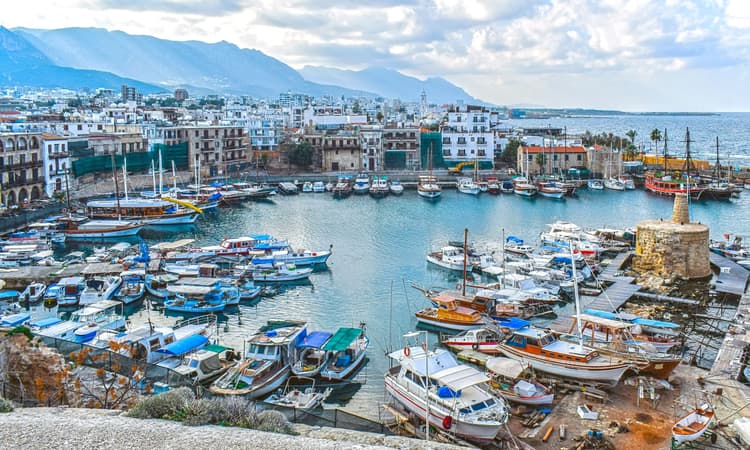
Cyprus: Europe’s Sunniest Destination – 300+ Sunny Days
Explore Cyprus, Europe’s sunniest destination with 300+ sunny days a year. Discover top resorts, best seasons to visit, and why it’s perfect for a holiday.
Read more

Belly Fat and Aging: New Scientific Discoveries
Recent research reveals how belly fat accelerates aging, boosts inflammation, and increases Alzheimer's risk—discover key health insights and prevention tips.
Read more