.jpg&w=640&q=75)
December 24,12 min. to read
Historical roots of the division
Until the middle of the 11th century, the Christian Church was unified, although cultural and theological differences existed between its eastern and western parts. The final schism was the result of a long process of alienation, in which theological disputes, political ambitions, and cultural characteristics became intertwined. The Western Church sought to centralize power in the hands of the Pope of Rome, while the Eastern Church adhered to the conciliar principle of governance. These fundamental differences in views on church organization became one of the main reasons for the division.Main doctrinal differences
The question of church authority and structure
The most significant difference between Catholics and Orthodox Christians concerns the understanding of church hierarchy and the source of authority. In the Catholic tradition, the Pope of Rome is considered the Vicar of Christ on earth and the supreme head of the entire Christian Church. His authority extends to all Catholic communities worldwide, and his decisions are binding for all believers. The dogma of papal infallibility, adopted in 1870, states that when the pontiff speaks ex cathedra on matters of faith and morals, he cannot err. The Orthodox Church rejects the idea of the sole authority of one person over the entire Christian world. It consists of fifteen autocephalous churches, each governed by a council of bishops headed by a patriarch, metropolitan, or archbishop. All primates of the local churches are equal to one another, and none can dictate his will to the others. Orthodox Christians recognize Jesus Christ as the only Head of the Church, and the most important decisions are made collectively at councils.Filioque and the doctrine of the Holy Trinity
One of the oldest theological disagreements is connected with the question of the procession of the Holy Spirit. In the 7th century, the Western Church added the word “filioque” (from Latin — “and from the Son”) to the Creed, asserting that the Holy Spirit proceeds from the Father and from the Son. This addition was officially закреплено in 1014. The Orthodox Church preserved the original formulation, according to which the Holy Spirit proceeds only from the Father, based on the words of Christ in the Gospel. Orthodox theologians believe that the addition of the filioque distorts the teaching on the Holy Trinity and violates the equality of the Persons of the Trinity.The doctrine of the soul’s fate after death
Catholic doctrine includes the concept of purgatory — an intermediate state between heaven and hell. According to this teaching, the souls of the deceased who did not have time during their lifetime to fully cleanse themselves of venial sins enter purgatory for temporary punishment and purification. After this process is completed, the souls enter the Kingdom of Heaven. The Catholic Church also teaches the existence of the treasury of supererogatory merits of the saints, which the Church can dispense to alleviate the fate of souls in purgatory. Orthodoxy rejects the idea of purgatory and does not divide sins into venial and mortal. After death, the soul passes through toll houses — a kind of trials where all the deeds of a person during their lifetime are evaluated. Orthodox believers hold that the prayers of the Church and individual Christians can change a person’s posthumous fate by God’s mercy, but the final decision on eternal destiny is rendered at the Last Judgment.Mariological dogmas
Attitudes toward the Virgin Mary also differ in the two traditions. The Catholic Church has proclaimed two special dogmas about the Mother of God. The dogma of the Immaculate Conception of the Virgin Mary (1854) states that the Mother of God was freed from original sin at the moment of her conception through the future redemptive merits of Christ. The second dogma, the Assumption of the Virgin Mary (1950), proclaims that Mary was taken up into heaven with both body and soul. The Orthodox Church deeply venerates the Mother of God, calling Her Most Pure and Most Holy, but does not recognize the dogma of the Immaculate Conception. Orthodox Christians believe that Mary was by nature the same as all people, although she had no personal sins. Her salvation from the consequences of original sin became possible after the Resurrection of Christ. Orthodoxy teaches that the Mother of God died a natural death but was the first among mortals to be taken up into heaven because of her holiness.Ritual and practical differences
Sacraments and liturgical practice
Significant differences appear in the administration of church sacraments. In the Catholic tradition, for a long time laypeople received Communion only with the Body of Christ (bread), while priests received both the Body and the Blood (wine). Although this practice is now being reconsidered, it is still found in many Catholic parishes. The Orthodox Church has always communicated believers with both the Body and the Blood of Christ, regardless of their status. For the Eucharist, Catholics use unleavened bread (the host), while Orthodox Christians use leavened bread (prosphora). The sacrament of chrismation in Catholicism is called confirmation and is performed separately from baptism upon reaching a conscious age, usually thirteen or fourteen years. Catholic children are admitted to Communion no earlier than six or seven years of age. In the Orthodox Church, infants are baptized and chrismated simultaneously, and they are admitted to Communion immediately after baptism.Priesthood and celibacy
The Catholic Church requires all clergy to observe celibacy — a vow of abstinence from marriage. This rule applies to both bishops and priests. Exceptions are made only for priests of the Eastern Catholic Churches and for Protestant pastors who convert to Catholicism. In the Orthodox tradition, priests may marry, but only before ordination. Bishops are chosen exclusively from monks who have taken vows of celibacy. This practice dates back to the ancient times of Christianity.Calendar and dates of holidays
The Catholic Church uses the Gregorian calendar, introduced by Pope Gregory XIII in 1582. Most Orthodox churches (Russian, Serbian, Georgian, Jerusalem) retain the Julian calendar for all liturgical services. Some local Orthodox churches have switched to the Revised Julian calendar for fixed feasts, but the calculation of Easter and related feasts is carried out according to the Julian system. Because of calendar differences, many common holidays are celebrated on different dates. For example, Christmas in Catholicism falls on December 25 according to the Gregorian calendar, while Orthodox Christmas is celebrated on January 7 (December 25 according to the Julian calendar).External differences in churches and prayer
The arrangement of churches and liturgical practice also have differences. In Orthodox churches, the altar is separated from the main space by an iconostasis — a wall with icons and three doors. In Catholic churches, the altar refers to the altar table itself, which is usually located in an open space. Catholic churches are equipped with pews for parishioners, who sit during part of the service. Orthodox churches traditionally do not have seating in the central area, since an important element of prayer is making prostrations. Catholics make the sign of the cross from left to right with five fingers, while Orthodox Christians do so from right to left with three fingers, symbolizing faith in the Holy Trinity.Sources of doctrine and Sacred Tradition
Both churches recognize Sacred Scripture and Sacred Tradition as the foundation of doctrine. However, their understanding of Sacred Tradition differs significantly. The Catholic Church adheres to the theory of doctrinal development, allowing for the possibility of adopting new dogmas and supplementing Sacred Tradition with new doctrinal texts. Catholics include in Sacred Tradition the decrees of twenty-one Ecumenical Councils (the last took place in 1962–1965), decisions of the popes of Rome, and other church documents. The Orthodox Church believes that Christian teaching cannot be subject to change. Sacred Tradition is understood as the decrees of the seven Ecumenical Councils (the last took place in 787), Orthodox canons, liturgical texts, and the writings of the Church Fathers of the era of the Ecumenical Councils.What unites Catholics and Orthodox Christians
Despite all the differences between Catholicism and Orthodoxy, there are many common elements that bring these churches close to one another. Both traditions profess faith in the Holy Trinity — God, one in three Persons: the Father, the Son, and the Holy Spirit. The foundation of life for believers of both confessions is the Lord Jesus Christ, and all strive to live according to His commandments. The Catholic and Orthodox Churches have apostolic succession, recognize seven church sacraments, venerate the Virgin Mary as the Mother of God and Ever-Virgin. Both churches share the common spiritual heritage of the first millennium of Christianity and have many common saints who lived before the schism of 1054. In matters of Christian ethics and morality, the positions of the churches largely coincide. Both traditions defend the traditional understanding of the family, uphold the inalienable right to life from the moment of conception, do not accept abortion and euthanasia, and do not recognize same-sex unions.Prospects for dialogue and cooperation
In the modern world, where traditional Christian values face serious challenges, dialogue and cooperation between the Catholic and Orthodox Churches acquire special significance. Both churches can jointly defend traditional moral principles such as the sanctity of the family, the value of human life, and marital fidelity. Although theological disagreements between the churches remain significant and overcoming them requires time, mutual respect and recognition of common Christian roots create a foundation for constructive interaction. Understanding the differences between Catholicism and Orthodoxy helps not only to avoid misunderstandings, but also to appreciate the richness of the Christian tradition in its diversity. Studying the characteristics of each confession deepens the understanding of Christianity as a world religion and shows how a common faith can be expressed in various theological and cultural forms, while preserving unity in what is essential — love for God and one’s neighbor.Latest News
.jpg&w=750&q=75)
State Flag of Russia: Design, History, Symbolism, and Rules of Use
Overview of the Russian tricolor: its appearance, history, symbolism of colors, rules of use, and the significance of State Flag Day in Russia.
Read more
.jpg&w=750&q=75)
Will There Be New Year’s Fireworks in Moscow in 2026?
New Year’s fireworks in Moscow 2026: history of the tradition, why official salutes were canceled, public opinion, regional bans, and new celebration formats.
Read more
.jpg&w=750&q=75)
The Old New Year: History, Traditions, and Celebration Dates
The Old New Year is a traditional celebration on January 13–14, rooted in the calendar change, with rich history, folk customs, and modern festive traditions.
Read more
.jpg&w=750&q=75)
Why Eggs Are Dyed at Easter: History, Symbolism, and Traditions
Explains why Easter eggs are dyed, their Christian and pagan symbolism, legends, colors, techniques, and how the tradition reflects resurrection and life.
Read more
Latest Articles
.jpg&w=750&q=75)
How the Moon Formed: Theories, Collisions, and Scientific Discoveries
How the Moon formed: from the giant impact hypothesis to multi-impact models, alternative theories, and why the Moon is vital for Earth’s stability.
Read more
.jpg&w=750&q=75)
Solstice and Equinox: How Astronomical Events Shape the Seasons
An overview of solstices and equinoxes, explaining their astronomical causes, seasonal roles, differences between hemispheres, and cultural significance worldwide.
Read more

Setting Appropriateness & Romantic Success: New Study Insights
Discover how the perceived appropriateness of a setting drives the success of romantic advances—often outweighing factors like attractiveness or familiarity.
Read more
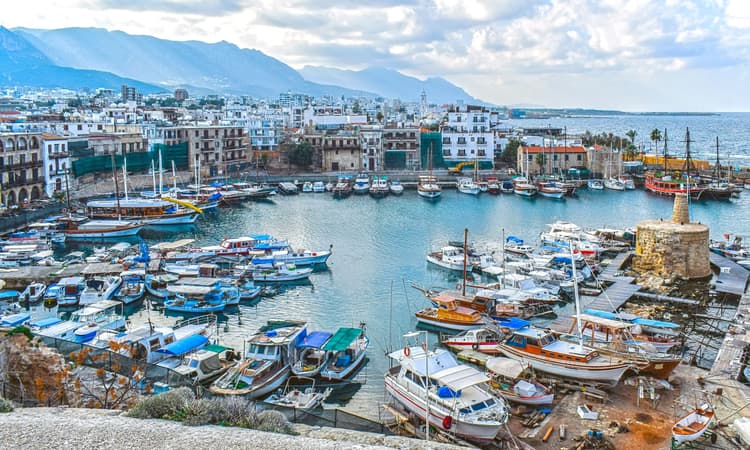
Cyprus: Europe’s Sunniest Destination – 300+ Sunny Days
Explore Cyprus, Europe’s sunniest destination with 300+ sunny days a year. Discover top resorts, best seasons to visit, and why it’s perfect for a holiday.
Read more

Belly Fat and Aging: New Scientific Discoveries
Recent research reveals how belly fat accelerates aging, boosts inflammation, and increases Alzheimer's risk—discover key health insights and prevention tips.
Read more