
December 29,5 min. to read
What does the word “rofl” mean
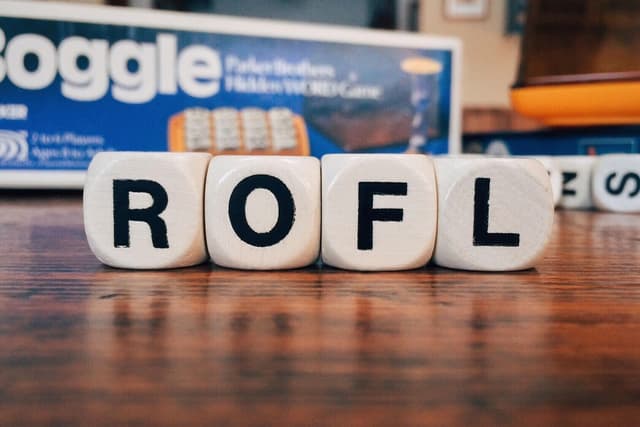
Rofl is an abbreviation, which stands for Rolling On the Floor Laughing. Literally, it means “rolling on the floor laughing.” This expression is used to indicate very strong laughter or something incredibly funny. The word has acquired several meanings:- A reaction to something funny — the main meaning, expressing a strong emotional response to something seen or heard
- The joke or prank itself — “rofls” can refer to funny memes, videos, situations, or anecdotes
- A form of internet humor — in online culture, “rofl” is used to describe content that causes intense laughter
History of the term’s origin
The abbreviation ROFL appeared on the internet quite a long time ago. According to the Oxford English Dictionary, the first recorded use of the term dates back to 1989. Initially, it was used by users of Usenet, one of the earliest online forums. In the early 2000s, the word began to spread actively across the English-speaking internet. Interesting fact: The peak popularity of the word “rofl” in the Russian-speaking internet occurred in June 2020, when Yandex recorded more than 90,000 search queries containing this word.Where the word “rofl” is used
The term “rofl” относится преимущественно к internet slang and is actively used in the following places:- Social networks (VK, Instagram, TikTok)
- Messengers and chats
- Comments under YouTube videos
- Online games with text chat
- Forums and imageboards
Examples of usage
“This is rofl” — said about something very funny. A funny cat video? That’s rofl. An absurd piece of news? Also rofl. “Your rofls are good” — a positive evaluation of someone’s jokes. If you received such a comment, it means your sense of humor was appreciated. “Are you rofling?” — translates as “Are you joking?” or “Are you messing with me?” Used when it’s hard to believe what was said. “He’s just a rofler” — means that the person is always joking and shouldn’t be taken seriously. “I love this channel, I’m always rofling at the videos” — a typical youth comment under entertaining content.Cultural significance of the term
The word “rofl” has become part of modern internet culture. It appears in the titles of music albums, is used as a hashtag on social media, and is even included in some youth slang dictionaries. Expert opinion: Philologists note that youth slang is constantly evolving. Words that are popular today may fall out of use in a few years. Alongside textual expressions like “rofl,” stickers and emojis are becoming increasingly popular for expressing emotions.Should you use the word “rofl”
The decision to use this slang term depends on the context and the audience:- Appropriate: for communication on social networks, with friends, in informal correspondence
- Not appropriate: for business communication, official documents, or interaction with the older generation
Conclusion
The word “rofl” has firmly entered the vocabulary of modern youth and active internet users. Knowing its meaning and derivative forms will help you better understand the language of social networks and feel more confident in online communication. The main thing is to use this term appropriately and keep the context of the conversation in mind.Latest Articles
Who Is a Pick-Me Girl? Meaning of the Term and Psychological Perspective
An explanation of the pick-me girl phenomenon, its meaning, psychological roots, social harm, and why it reflects deeper issues of gender stereotypes and self-esteem.
Read more

What IMHO Means: Origin and Usage
IMHO is an internet abbreviation meaning “in my humble/honest opinion,” used to express personal views politely and subjectively in online and offline communication.
Read more
What Does “Eshkere” Mean: The Origin and Popularity of a Youth Slang Meme
What “eshkere” means in youth slang, where the meme came from, how it evolved from rap culture, and why teenagers use such expressions today.
Read more

Understanding Abuse: Signs, Types, and How to Protect Yourself
Abuse is systematic violence in relationships, including psychological, financial, physical, or sexual harm, marked by cycles, control, and victim dependence.
Read more

Who Are Normies in Youth Slang and Why Being One Is Completely Normal
A detailed guide on "normies" — people with mainstream tastes and habits, their traits, origins, normcore style, and why being a normie is perfectly normal.
Read more

Cringe: What the Word Means and How It’s Used in Modern Culture
An explanation of the word “cringe”: its meaning, origins, usage in youth slang, cultural context, synonyms, examples, and role in modern communication.
Read more

Gaslighting: What It Is, How It Works, and How to Protect Yourself
An in-depth look at gaslighting: its mechanisms, warning signs, stages, effects on mental health, and practical ways to resist manipulation and recover.
Read more

Clip Thinking: Definition, Advantages, Disadvantages, and Impact on Children
Clip thinking is a cognitive style of fragmentary, fast information processing, shaped by digital media, with both advantages and challenges.
Read more

Tyanka: Meaning, Origin, and Usage of the Popular Russian Youth Slang
"Tyanka" is Russian youth slang from Japanese "tyan," meaning an idealized young girl, popularized by anime culture and online communities.
Read more