December 28,10 min. to read
What abuse is
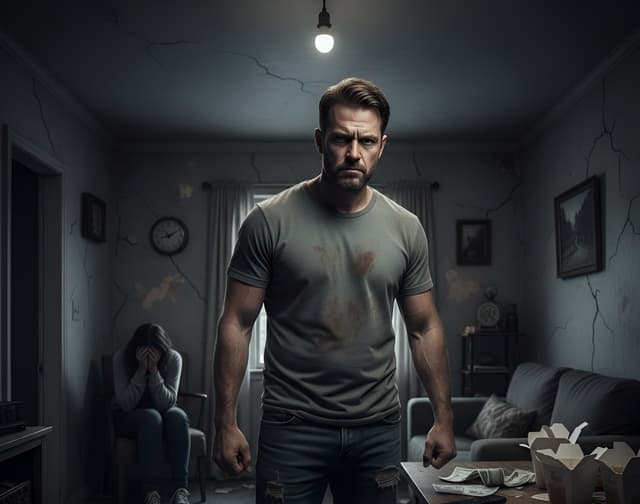
The main feature of abusive relationships is that the victim becomes dependent on the aggressor. This dependence can be emotional, financial, or psychological. The abuser deliberately deepens this dependence by controlling money flows, threatening physical harm, manipulating family values, or suppressing the partner’s will so strongly that the victim begins to believe life without the aggressor is impossible. The cyclical nature of abuse is another important characteristic of such relationships. Periods of violence alternate with phases of calm, when the abuser behaves exemplarily. This confuses the victim and creates false hope for change.Four stages of the abusive cycle
Psychologists identify four main stages that repeat over and over again: Tension. The aggressor experiences stress due to external or internal problems. He begins to take out negative emotions on the partner through resentment, ignoring, and accusations. Violence. Tension reaches its peak and turns into overt violence — psychological, sexual, or physical. The abuser loses control over his actions. Reconciliation. After the incident, the aggressor tries to regain the victim’s trust. He apologizes, gives gifts, assures that everything was misunderstood. Sometimes he blames the victim for provoking his behavior. Calm. A “honeymoon” period begins, when the relationship looks almost normal. This phase can last from a few days to several months, until a new trigger appears.Who becomes an abuser and a victim
Psychological profile of an abuser
Statistics show that most often the role of aggressor in romantic relationships is played by men, although women can also be abusers. According to the World Health Organization, about 27% of women worldwide have experienced partner violence at least once in their lives. People become abusers for several reasons: Mental disorders. Psychopathy reduces the ability for empathy, narcissism makes a person place themselves above others, and Machiavellianism is aimed at controlling people. An abusive family in childhood. A person who grew up in an atmosphere of violence often reproduces this model in their own relationships, not knowing any alternative. Low self-esteem. By suppressing others, the abuser compensates for their own insecurities and complexes.Why people become victims
There are factors that increase the risk of entering abusive relationships: Childhood trauma. A child who grew up in a violent family perceives such a model as the norm. Healthy boundaries are not formed, the connection with one’s own feelings is lost, and danger signals are not recognized. Low self-esteem. A person is convinced that they do not deserve better treatment and that bad relationships are the maximum they can count on. Fear of loneliness. A lack of inner support gives rise to the idea that any relationship is better than none. It is important to understand: these circumstances explain risks but never justify violence and do not make the victim guilty of what happened.Types of abuse: from manipulation to beatings
Psychological abuse
Abuse is not always associated with physical impact. Psychological abuse destroys personality no less effectively: Criticism and devaluation. The aggressor finds the victim’s weak spots and regularly presses on them. He convinces the partner that their life, work, and interests are worthless, and that continuing the relationship is a great favor. Guilt manipulation. The abuser shifts responsibility for all problems onto the victim. Even his own violence is explained as provoked by the partner. The victim begins to believe in their own inferiority. Emotional swings. Coldness and ignoring are abruptly replaced by declarations of love. This exhausts the victim and forms dependence on moments of approval. Social isolation. The abuser gradually cuts the partner off from friends, relatives, and colleagues. He presents this as care: “I know better who has a bad influence on you.”Economic abuse
Financial control is a powerful tool for holding a victim. The aggressor takes over the management of all money, persuades the partner to quit work under the pretext of care. As a result, the victim has no means to leave the relationship.Physical violence
It often begins with “testing the waters”: shouting, threats, breaking dishes, pushing. The abuser watches how far he can go. If the victim does not leave after the first incidents, violence usually escalates.Sexual violence
The abuser puts his needs above the partner’s desires. He insists on sex when the partner does not want it and, in extreme cases, resorts to rape. Refusal is presented as a sign of lack of love or abnormality. This also includes coercion into unwanted sexual practices, sabotage of contraception, and pressure regarding pregnancy.How to recognize an abuser: warning signs
Key markers of dangerous behavior
Neglect. Complete disregard for the partner’s needs, except during reconciliation periods. Aggression. Conflicts are accompanied by shouting, insults, threats, or actual physical violence. Double standards. The abuser allows himself what he forbids the partner: meeting friends, spending money, communicating with exes. Jealousy and control. The aggressor is jealous of everything, checks messages, demands reports on movements. Refusal is perceived as proof of infidelity. Blackmail. “If you don’t do it my way, I’ll go to someone else,” “I won’t let you see your friends unless you meet my demands.” Devaluation of former partners. All previous relationships are described as terrible, and the new victim is placed on a pedestal as the only worthy one. Gaslighting. Denial of the obvious: “That didn’t happen,” “You imagined it,” “You’re going crazy.” Mood swings. The abuser is unpredictable. Half an hour after a charming conversation, he may turn into a screaming tyrant.Female abusers
Although women are less often aggressors, their methods are practically no different from men’s. Studies show that female abusers more often use psychological pressure, manipulate children, and threaten to take them away. At the same time, the abuse cycle may be incomplete — reconciliation does not always follow violence.How to protect yourself from abuse
Recognizing the problem
The first step is to admit that you are in an abusive relationship. To do this, you need to learn to trust your own feelings and stop ignoring alarming signals. It is important to understand: hope for an abuser’s change is almost always illusory. He can change only if he himself realizes the problem and wants to work on it with a psychotherapist.Seeking support
Crisis centers for victims of domestic violence provide comprehensive assistance: - Legal consultation - Psychological support - Temporary shelter - Help with food and clothing - Assistance with employment - Help finding separate housingSafe exit
The moment of separation is the most dangerous period. An abuser who is losing control may sharply increase pressure: move from psychological to financial abuse, from threats to real physical violence. Plan your exit in advance and enlist the support of specialists or trusted people.Working through the aftermath
After leaving a toxic relationship, psychological help is critically important. Processing trauma helps to recover and avoid repeating negative experiences in the future. According to statistics, victims often return to the abuser — on average up to seven times before finally breaking the bond.Resisting abuse at work
If the abuser is a boss and changing jobs is not an option, the following strategies can help: - Clearly defining personal boundaries - Recognizing manipulation - Shifting communication into a professional framework - Documenting all tasks in writing - Evaluating work by pre-agreed criteria - Complying with the employment contract regarding overtimeCan an abuser change
Change is possible only if several conditions are met: - The aggressor must recognize the problem themselves - They must sincerely want to change - Work with a psychotherapist or psychologist is required Working on oneself requires enormous effort and time. It is necessary to identify the roots of destructive behavior, change deep-seated beliefs, learn to control impulses, cope with stress without violence, and build healthy relationships. Without professional help and sincere motivation, an abuser will not change. Hoping for spontaneous improvement means deceiving yourself and putting yourself in danger.Key points about abuse
Abuse is systematic violence aimed at suppressing and controlling another person. It can take various forms: from psychological manipulation to physical beatings. The main signs are cyclicality, victim dependence, and gradual escalation of pressure. No one deserves cruel treatment. If you recognize yourself in the description of a victim, seek help. If you recognize signs of an abuser in yourself, start working with a psychologist. Leaving toxic relationships is possible, although it requires courage, support, and time. Remember: abusive relationships have nothing to do with love. True love is based on respect, equality, and care for a partner’s well-being.Latest Articles

Who Are Normies in Youth Slang and Why Being One Is Completely Normal
A detailed guide on "normies" — people with mainstream tastes and habits, their traits, origins, normcore style, and why being a normie is perfectly normal.
Read more

Cringe: What the Word Means and How It’s Used in Modern Culture
An explanation of the word “cringe”: its meaning, origins, usage in youth slang, cultural context, synonyms, examples, and role in modern communication.
Read more

Gaslighting: What It Is, How It Works, and How to Protect Yourself
An in-depth look at gaslighting: its mechanisms, warning signs, stages, effects on mental health, and practical ways to resist manipulation and recover.
Read more

Clip Thinking: Definition, Advantages, Disadvantages, and Impact on Children
Clip thinking is a cognitive style of fragmentary, fast information processing, shaped by digital media, with both advantages and challenges.
Read more

Tyanka: Meaning, Origin, and Usage of the Popular Russian Youth Slang
"Tyanka" is Russian youth slang from Japanese "tyan," meaning an idealized young girl, popularized by anime culture and online communities.
Read more

Alt Subculture and Altushki: Teen Identity, Style, and Online Communities
Alt subculture ("altushki") in Russia blends bold fashion, creative self-expression, and online communities, reflecting teens’ search for identity and belonging.
Read more

What "Imba" Means in Youth Slang: Origins, Usage, and Examples
"Imba" is youth slang from gaming, meaning "cool" or "outstanding," used to praise people, skills, or things in everyday teen speech.
Read more

Generation Beta: The Next Technologically Immersed Generation Shaping 2025–2039
Generation Beta (2025–2039) will grow up fully immersed in technology, facing unique social, environmental, and digital challenges while shaping the future.
Read more
Generations by Years: Theory, Classification, and Key Differences
An overview of the theory of generations by years, explaining how historical and social conditions shape values, behavior, and differences between age groups.
Read more