
December 26, 2025,14 min. to read
Origin of the Term and Historical Context
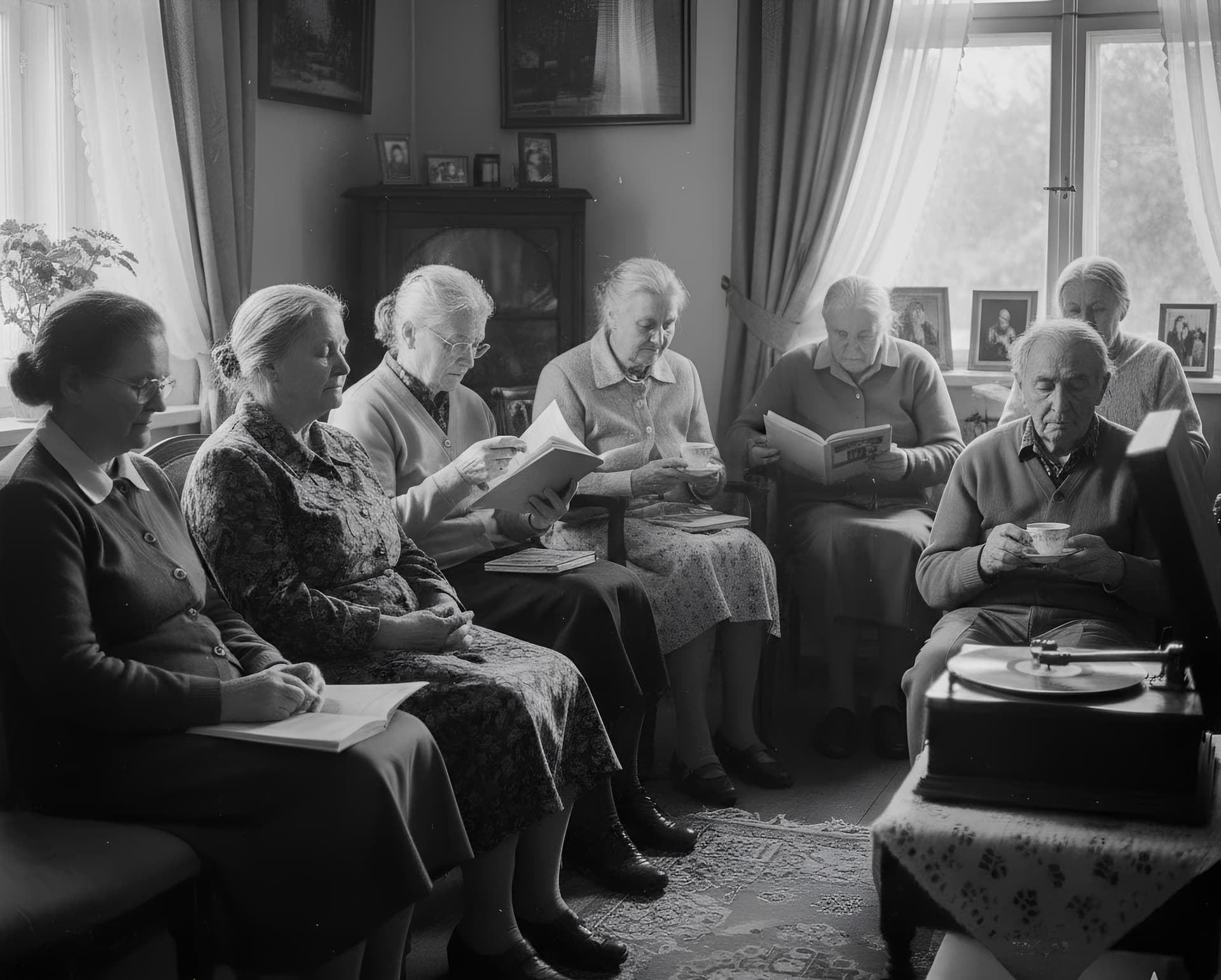
The term “Silent Generation” first appeared in Time magazine in November 1951 in an article devoted to contemporary youth. Journalists noted a striking feature of young people at the time—their reluctance to speak out loudly, issue manifestos, or engage in protests. Unlike the fiery youth of their parents, representatives of this generation preferred to remain in the shadows and avoid attracting unnecessary attention. The name proved especially apt during the era of McCarthyism in the United States, when political repression and persecution of dissenters forced people to be extremely cautious in expressing their own opinions. Silence became not merely a character trait but a survival strategy under conditions of ideological pressure and social control. According to the Pew Research Center, the Silent Generation includes people born between 1928 and 1945. According to the 2019 U.S. Census, there were about 23 million representatives of this demographic group in the country. In the United States, this generation was relatively small due to the economic hardships of the Great Depression and the war years, when birth rates declined significantly.Childhood in an Era of Upheaval
The Great Depression and Its Consequences
Early members of the Silent Generation were born during an economic crisis, when their parents, who had experienced the roaring 1920s, suddenly faced mass unemployment, bankruptcies, and financial collapse. Shortages, hunger, and the struggle for survival became everyday reality for millions of families around the world. In the Soviet Union, this generation’s childhood coincided with collectivization, industrialization, the political repressions of the 1930s, and mass famine. Many children had to grow up early, learn to hide emotions, and be cautious with words. An atmosphere of fear and distrust permeated society, shaping a particular type of personality—reserved, prudent, and capable of adapting to any conditions.World War II
The youth of the Silent Generation coincided with the most devastating conflict in human history. Some fought on the fronts of the Korean War, others worked on the home front, enduring bombings, hunger, and constant anxiety for the lives of loved ones. The loss of fathers, brothers, and sisters became a tragic experience that left an indelible mark on the psyche of an entire generation. Representatives of the Silent Generation witnessed the fall of Nazism, saw the horrors of concentration camps, and observed the catastrophic destruction caused by nuclear weapons. These events shaped their worldview, based on an understanding of the fragility of peace and the value of stability.Key Characteristics and Values
Work Ethic and Responsibility
The Silent Generation was distinguished by an exceptionally strong work ethic. For its representatives, a promise was a sacred duty—if a person took on a task, they carried it through to the end regardless of obstacles. Reliability and predictability were considered the most important qualities upon which both personal relationships and professional reputations were built. Loyalty to one’s employer was the norm—many people spent their entire careers in a single company, valuing stability and job security above potential career prospects. This dedication created a stable workforce and contributed to the postwar economic boom, though it also limited labor mobility.Frugality and Financial Caution
Having lived through years of deprivation, representatives of the Silent Generation developed a special attitude toward money and material values. They sought to extend the lifespan of possessions as much as possible, avoided impulse purchases, and preferred saving to spending. Frugality reached extreme levels—throwing away something that could still be used was considered inexcusable waste. This financial caution lasted a lifetime. Even during periods of economic prosperity, the Silent Generation remained conservative in spending, favoring reliable investments over risky ventures. They built savings, purchased real estate, and avoided debt, seeing ownership as the main guarantee of security.Emotional Restraint and Self-Control
One of the defining traits of the Silent Generation was a tendency toward emotional restraint. In conditions where open expression of feelings could be perceived as weakness or even pose danger, people learned to keep their experiences to themselves. Joy, grief, fear—all of this often remained unspoken, turning into internal tension. Tears and displays of vulnerability were considered unacceptable, especially for men. Even within the family, warm feelings were conveyed more through care and actions than through words. The slogan “keep yourself together” became a life principle that defined behavior in any circumstances.Collectivism and Social Duty
In the understanding of the Silent Generation, the individual existed primarily as part of a collective. To be a good person meant conforming to social norms, being disciplined, loyal to the homeland, and reliable for one’s family. Individual traits and personal desires took a back seat to public interests. Conscience was perceived as the internalized voice of the collective, while shame served as an instrument of social regulation. It was shameful to stand out, break established order, or display excessive individuality. Under conditions of strict ideological control, inner experiences were adjusted to external expectations.Postwar Reconstruction and Historical Role
Builders of a New Reality
When World War II ended, the burden of rebuilding devastated countries fell on the shoulders of the Silent Generation. They faced desolation and ruin during their early adult years. Their diligent labor laid the foundation for the economic miracle of the postwar decades in Europe, the United States, and other regions of the world. The Australian research agency McCrindle Research uses the term “Builders” for this generation, emphasizing their role in the literal and metaphorical construction of the nation after years of austerity. They rebuilt cities, created infrastructure, developed industry, and formed the institutions of civil society.The Silent Majority
In 1969, Time magazine named the silent majority of the American middle class “Man and Woman of the Year.” This recognition reflected the enormous role of the generation in maintaining social stability. Unlike their predecessors, who fought to change the system, and their successors—the Baby Boomers—who were prone to protest, the Silent Generation preferred to work within the existing system, keeping their heads down and working hard. They did not rise in unified protest against authority. Following the rules brought them success and steady wealth accumulation, which often led to alienation from their own children—Boomers and members of Generation X—who exhibited diametrically opposite rebellious tendencies.Subcultural Diversity
Despite their general reputation for restraint, the Silent Generation was not monolithic. It produced representatives of the Beat Generation, stilyagi, bikers, and other subcultures that challenged accepted norms. These movements became harbingers of the cultural revolution of the 1960s, though they remained marginal phenomena against the backdrop of a conservative majority. In the USSR, representatives of the Silent Generation included the so-called “Sixtiers”—intellectuals who, after Stalin’s death, cautiously began to question totalitarian dogmas and contributed to the cultural thaw.Family and Personal Life
Early Marriage and Large Families
Following the example of their parents, representatives of the Silent Generation sought to marry and have children at a young age. American members of this group are considered the youngest generation to marry in U.S. history. Stability and traditional family values were a priority. This generation became parents of the Baby Boomers, the massive postwar demographic wave. Younger members of the Silent Generation who delayed starting families gave rise to Generation X.Reform of the Institution of Marriage
Paradoxically, it was the Silent Generation—raised in an atmosphere of traditionalism—that reformed marriage laws and normalized divorce. If for their parents divorce was considered the ultimate sin, the Silent Generation recognized the right to dissolve an unsuccessful union, changing society’s perception of the institution.Political Influence and the Paradox of Power
Until the 2020 presidential election, no representative of the Silent Generation had become President of the United States. Seven presidents belonged to the preceding “Great” Generation, and four to the subsequent Baby Boomers. Only with the election of Joe Biden, born in 1942, did the Silent Generation gain a representative in the highest office of power, although by that time most of his peers were already of advanced age.Impact on the Modern Market and Economy
Consumer Behavior
Despite their advanced age, representatives of the Silent Generation continue to influence the economy thanks to the assets accumulated over a lifetime. Their purchasing habits reflect values formed over decades: practicality, quality, and reliability matter more than aesthetics and novelty. This generation demonstrates high brand loyalty, preferring time-tested products to new offerings. They are willing to pay more for quality and durability but are not easily swayed by discounts and sales. Impulse purchases are uncharacteristic of this consumer group.Preference for Traditional Communication Channels
The Silent Generation values face-to-face communication, handwritten letters, and direct contact. Although many have mastered modern technologies, traditional mass media—television and print press—remain more familiar and reliable sources of information. For successful marketing of goods and services to this generation, companies should use nostalgic elements in advertising, emphasize product functionality, and build trust through reputation and consistency. Local newspapers, community publications, and events at senior centers remain effective channels for reaching this audience.Wealth Transfer and Economic Legacy
Asset Accumulation
The Silent Generation lived through an era of postwar economic prosperity, stable employment, and rising real estate values. Thanks to frugality, disciplined savings, and prudent investments, representatives of this group accumulated significant assets—real estate, financial holdings, and businesses.Impact of Inheritance
As the Silent Generation transfers accumulated wealth to children and grandchildren, a large-scale transformation of the economy is underway. This transfer of assets creates a ripple effect, leading to changes in ownership structures, capital management, and consumption patterns. However, inheritance also increases the wealth gap between generations. If younger generations inherit not only assets but also the financial behavior model of the Silent Generation, overall consumer demand may decline and economic growth may slow.Influence on Social Programs
The Silent Generation became the first mass demographic group to benefit from social security systems and government support programs for the elderly. Their demands in healthcare, pensions, and social services significantly influenced government spending and budget policies in many countries.Psychological Legacy
Transmission of Emotional Patterns
The tendency to suppress emotions, formed during years of hardship, was passed on to children and grandchildren of the Silent Generation through family upbringing models. Strictness, high expectations, and condemnation of “improper” behavior were ways to instill the skill of “keeping oneself together” and living in a way that avoids shame. Behind the apparent severity lay a sincere desire to prepare descendants for life’s difficulties. However, the lack of emotional closeness and open expression of feelings created psychological problems in subsequent generations, giving rise to a demand for psychotherapy and emotional liberation.The Value of Resilience
The ability to withstand stress and remain composed in crisis situations is the most important legacy of the Silent Generation. This psychological resilience was formed not in theory but through daily trials, making it genuine and deeply integrated into character.Conclusion
The Silent Generation occupies a special place in the history of the twentieth century. Forged in the crucible of wars, economic crises, and political upheavals, it demonstrated extraordinary resilience and capacity for self-sacrifice. Their silence was not weakness but a survival strategy that allowed them to endure the era and rebuild a shattered world. The values of this generation—hard work, responsibility, frugality, loyalty—continue to influence the economy, society, and culture. Their approach to life, based on stability and predictability, laid the foundation for the prosperity of subsequent generations, though it also led to value conflicts with more free and individualistic descendants. As representatives of the Silent Generation pass away, their legacy remains—accumulated assets, created institutions, and behavioral patterns transmitted through upbringing. Understanding this generation helps make sense not only of the past but also of the present, in which the social and economic mechanisms they established continue to operate.Latest Articles
.jpg&w=1920&q=75)
Chinese New Year 2026: The Year of the Red Fire Horse and Its Traditions
Chinese New Year 2026 begins on February 17 and ushers in the Year of the Red Fire Horse, symbolizing energy, change, traditions, and renewal.
Read more

Who Is an “Ank” and What Does This Slang Term Mean
A detailed explanation of the slang term “ank,” its origin, traits, cultural meaning, ironic use by zoomers, and its role in modern youth language.
Read more

What Is Tilt: Causes, Signs, and How to Regain Emotional Control
Tilt is a state of emotional overload where rational thinking breaks down and impulsive actions take over, common in games, work, trading, and everyday life.
Read more

Phishing in 2026: Types, Risks, and How to Protect Your Data
Phishing uses AI and fake sites to steal data. Learn types, signs, protection methods, and actions if targeted to stay safe online.
Read more
%20(1).jpg&w=1920&q=75)
Cyberbullying: Types, Consequences, and How to Protect Yourself
Cyberbullying is online psychological abuse with serious mental, social, and physical consequences; anyone can be a victim, and prevention requires awareness and action.
Read more

“KFC Boss”: Meaning, Origin, and Why This Slang Term Is Considered Offensive
Explanation of the slang term “KFC Boss,” its meaning, origins, usage online, why it’s offensive, and how people respond to and protect themselves from it.
Read more
.jpg&w=1920&q=75)
Signs of a Gold Digger: How to Recognize Self-Serving Relationships
Signs of a gold digger include obsession with money, expensive gifts, jealousy, entitlement, and using relationships for wealth and status, not love.
Read more
.jpg&w=1920&q=75)
Understanding Trolling: Types, Techniques, and How to Protect Yourself Online
Trolling is a deliberate provocation in online communities aimed at causing conflict. It includes various techniques like subtle, heavy, and pseudo-trolling, and can be harmful.
Read more
.jpg&w=1920&q=75)
What Does “Chinazes” Mean: Origin and Use of a Youth Slang Meme
An overview of the meme word “chinazes”: its origin, meaning in youth slang, pronunciation, usage examples, cultural impact, and why parents shouldn’t worry.
Read more
.jpg&w=1920&q=75)
What Does KEK Mean? Origin and Meaning of the Popular Internet Meme
An overview of the KEK meme: its gaming origins, evolution from StarCraft and World of Warcraft, meanings in slang, cultural ties, and difference from LOL.
Read more