
December 27,7 min. to read
What the word "normie" means
Normie is a slang term referring to a person with ordinary, mainstream views, interests, and habits. The word comes from the English adjective "normal," which translates as "ordinary." The term is used to describe people who behave conventionally, follow social norms, and do not seek to stand out from the crowd. Depending on the context, the word can carry either a neutral or negative connotation.Origin of the term
According to the Merriam-Webster dictionary, the concept of "normie" appeared in the late 1980s in the USA. Initially, it was used by people with disabilities or developmental differences, ironically referring to the rest of the population without such health issues. In the early 2000s, the word migrated into internet slang. Its meaning expanded significantly to include all people who follow a traditional lifestyle and conform to accepted social norms. In online communities, the term often carries a condescending tone. In the Russian internet, the word "normie" began gaining popularity in the mid-2010s. Its spread was facilitated by anonymous forums, where users considered themselves part of alternative culture and contrasted themselves with "ordinary" people.Typical traits of normies
Since "normie" is an umbrella term, different subcultures may have their own criteria for defining such a person. However, some common characteristics include:- Attachment to popular culture — normies prefer mainstream literature, music, and movies, keeping up with trends
- Lack of desire to stand out — they are comfortable being part of society and not differing from others
- Conformism — normies are usually content with their lives, so they are not inclined to oppose political or social phenomena
- Traditional humor — they may not understand niche internet memes and might share outdated demotivators and jokes
- Simple clothing style — they prefer a casual style that blends in with others
- Standard life goals — success for a normie often relates to consumerist categories: good job, apartment, car, family
Normie clothing style: normcore
In 2013, a team of American artists from the K-HOLE project recorded a rise in the popularity of "normcore" — an extremely simple clothing style without extravagance. Since then, the term has gained global usage and is used to describe the wardrobe of normies. Normcore is characterized by the following features:- Basic, unremarkable clothing items
- Loose-fitting clothes
- Muted color palette
- Unisex style
- Lack of bright accents or flashy details
Who uses the term "normie"
The concept of "normie" is especially active in various online communities and subcultures. Each group has its own understanding of who qualifies as a normie: Internet users call normies those who are not immersed in niche online interests and use only popular social networks. Anime fans consider normies to be people who watch only the most popular Japanese cartoons, like "Naruto" or "Attack on Titan." Arthouse enthusiasts call normies fans of mainstream commercial movies. Gamers from niche gaming communities may label as normies those who play only popular AAA games.Is it okay to be a normie
Normie behavior is essentially a manifestation of conformism — following rules, norms, and group expectations. Conformists usually do not oppose established norms due to fear of going against public opinion, fear of loneliness, or personality traits.Historical context
The contrast between "ordinary" and unconventional people existed long before the internet. During the Romantic era at the turn of the 18th-19th centuries, contented "Philistines" (bourgeois) and enthusiasts or dreamers who wanted to escape everyday burdens were described. Important to understand: the distinction between "normies" and "different from everyone else" is often tied to adolescent identity-seeking and the desire to be accepted in a certain group. Teenagers strongly desire to join a subculture to find like-minded individuals, gain recognition, and separate from parents.Psychologists' opinion
Modern psychology emphasizes the importance of self-acceptance. If you feel comfortable following social norms, you shouldn’t try to change your personality just because someone online uses the term "normie" negatively. Following accepted norms is natural for humans. It helps integrate into society, improves group communication, and helps avoid conflicts. This does not mean normies are uninteresting or unoriginal; on the contrary, it reflects a successful social adaptation strategy.Why people become normies
There are several main reasons people follow a traditional lifestyle:- Raised in a traditional family — if parents follow social norms, their children are likely to become normies too
- Desire for stability — a traditional lifestyle provides predictability and safety
- Fear of going against public opinion — fear of challenge and emotional confrontation with society
- Fear of loneliness — the desire for communication and group belonging is a natural mechanism
- Personal preferences — many simply enjoy the simple pleasures of life without seeking extraordinary experiences
Key points about normies
- Normie — a slang term for a person with mainstream views and tastes
- The term comes from the English word "normal" and entered the Russian internet in the mid-2010s
- In online communities, it often carries a negative or condescending connotation
- The term gained popularity through anonymous forums where users contrasted themselves with "normal people"
- Key traits of normies: conformism, attachment to popular culture, lack of desire to stand out
- Normcore — the clothing style of normies: simple, basic, and unremarkable
- Being a normie is completely normal — it is a conscious choice of many people, and it has the right to exist
- Most important takeaway: accept yourself as you are, regardless of labels and online opinions
Latest Articles

Cringe: What the Word Means and How It’s Used in Modern Culture
An explanation of the word “cringe”: its meaning, origins, usage in youth slang, cultural context, synonyms, examples, and role in modern communication.
Read more

Gaslighting: What It Is, How It Works, and How to Protect Yourself
An in-depth look at gaslighting: its mechanisms, warning signs, stages, effects on mental health, and practical ways to resist manipulation and recover.
Read more

Clip Thinking: Definition, Advantages, Disadvantages, and Impact on Children
Clip thinking is a cognitive style of fragmentary, fast information processing, shaped by digital media, with both advantages and challenges.
Read more
Tyanka: Meaning, Origin, and Usage of the Popular Russian Youth Slang
"Tyanka" is Russian youth slang from Japanese "tyan," meaning an idealized young girl, popularized by anime culture and online communities.
Read more

Alt Subculture and Altushki: Teen Identity, Style, and Online Communities
Alt subculture ("altushki") in Russia blends bold fashion, creative self-expression, and online communities, reflecting teens’ search for identity and belonging.
Read more

What "Imba" Means in Youth Slang: Origins, Usage, and Examples
"Imba" is youth slang from gaming, meaning "cool" or "outstanding," used to praise people, skills, or things in everyday teen speech.
Read more
Generation Beta: The Next Technologically Immersed Generation Shaping 2025–2039
Generation Beta (2025–2039) will grow up fully immersed in technology, facing unique social, environmental, and digital challenges while shaping the future.
Read more
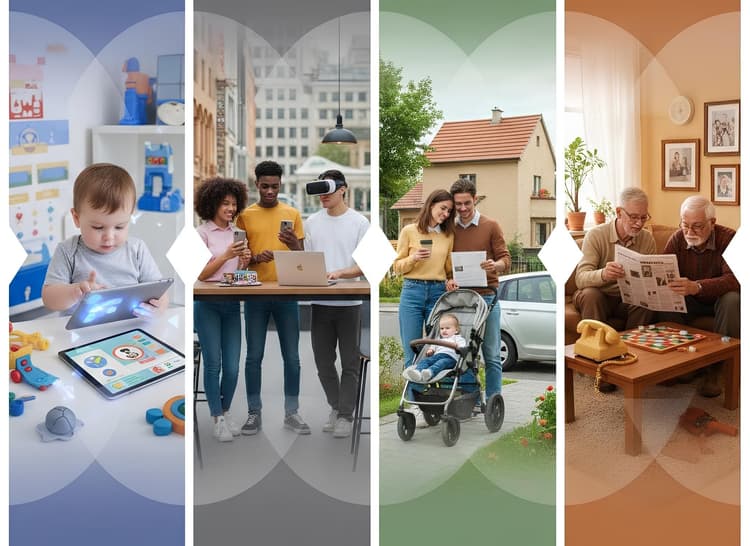
Generations by Years: Theory, Classification, and Key Differences
An overview of the theory of generations by years, explaining how historical and social conditions shape values, behavior, and differences between age groups.
Read more

Millennials (Generation Y): Traits, Values, and Influence on Modern Society
Millennials (Gen Y) grew up between analog and digital eras, valuing experiences, flexibility, self-growth, and work–life balance while shaping modern society.
Read more